Best Web Fonts of 2022

With 2022 almost upon us, it’s time to start looking ahead to upcoming web design trends! 2022 feels like a fresh start, so it’s the perfect time to refresh your most-used web fonts and explore new options.

If I’ve learned anything in my career as a web designer thus far, it’s that font choice matters. Selecting the perfect font for a web project is often the key thing that will either make or break a design. Fonts hold a lot of power to communicate – they have the amazing ability to reveal a brand’s voice, build personality, ensure readability, and subliminally tell the user if the brand is trustworthy and reliable. Use the wrong one, and your brand identity could fall apart; use the right one and your customers will come away with a better understanding of who you are.

But, with so many font options available and more being added daily, it can be difficult and overwhelming to try and dig through them all to find the perfect one – hours of designers’ time have been spent searching and scrolling through pages of typefaces. While it’s exciting to discover new ones, sometimes the time spent detracts from quality design hours.

Luckily for you, I’ve taken my hours of research and have compiled a list of the best web fonts of 2022! As an added bonus, all these fonts are either completely free or are included for use in your Adobe subscription, so you don’t need to break the bank to have that perfect font.

Sans Serif

Soleil
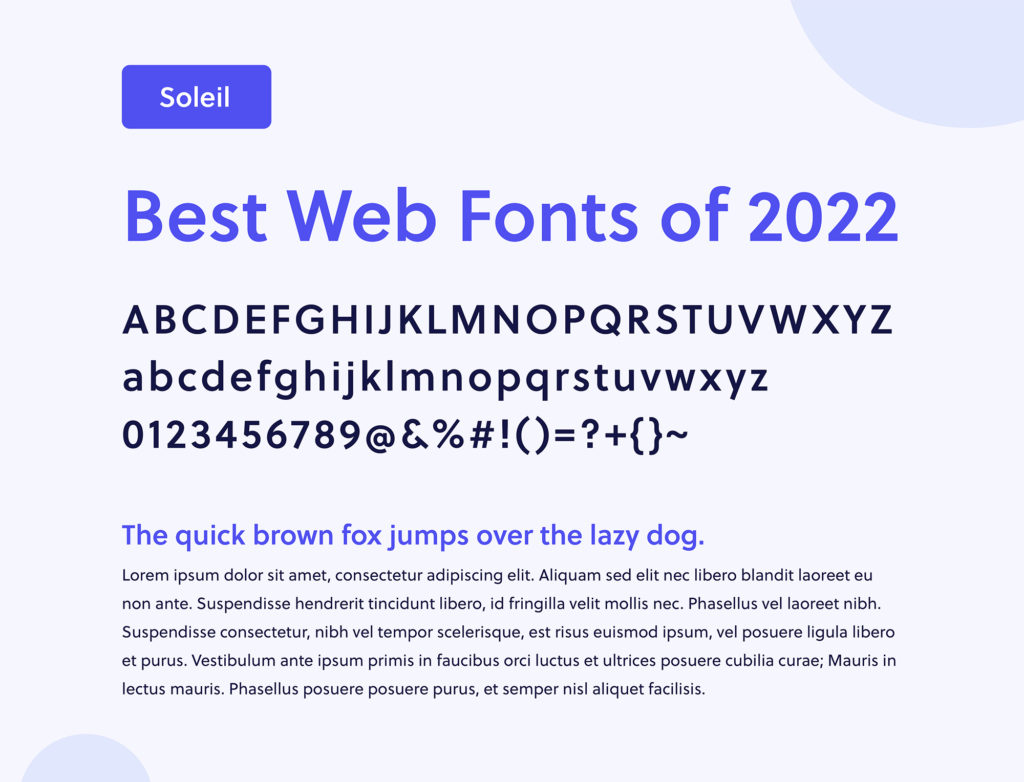
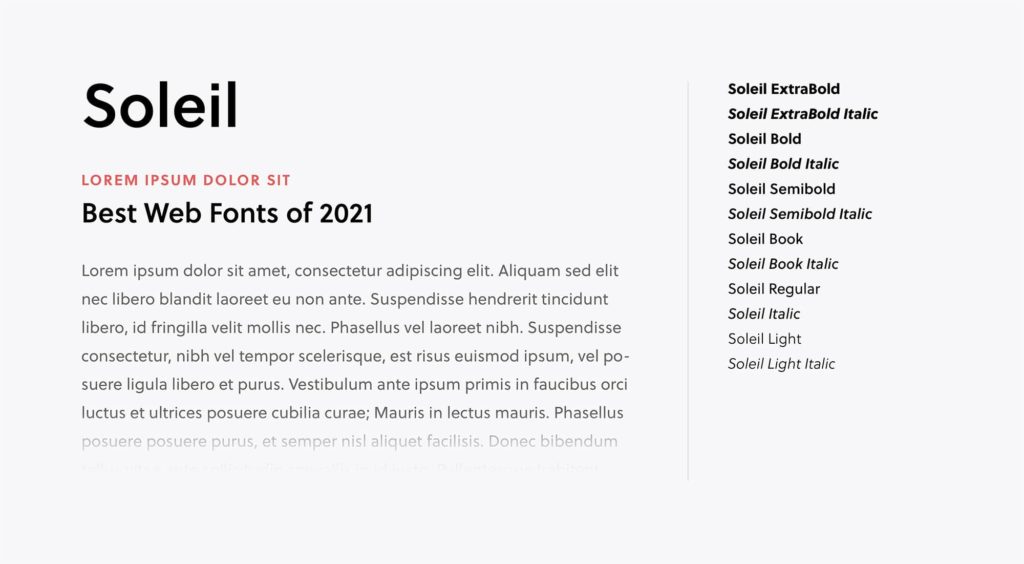
Soleil Best Web Font 2022

Soleil was on my “Best Web Fonts” list last year and continues to remain a favorite as we head into 2022. A modern take on a geometric typeface, its simplicity and clear letterforms lend it well to both headings and body text. Want a sneak peek into what it looks like on a live site? Look no further – you’re reading it! We love Soleil so much that we’ve used it as the body font on our own site.

Designed by Wolfgang Homola. Published by TypeTogether.

Find Soleil on Adobe Fonts at the link below:

Le Monde Sans
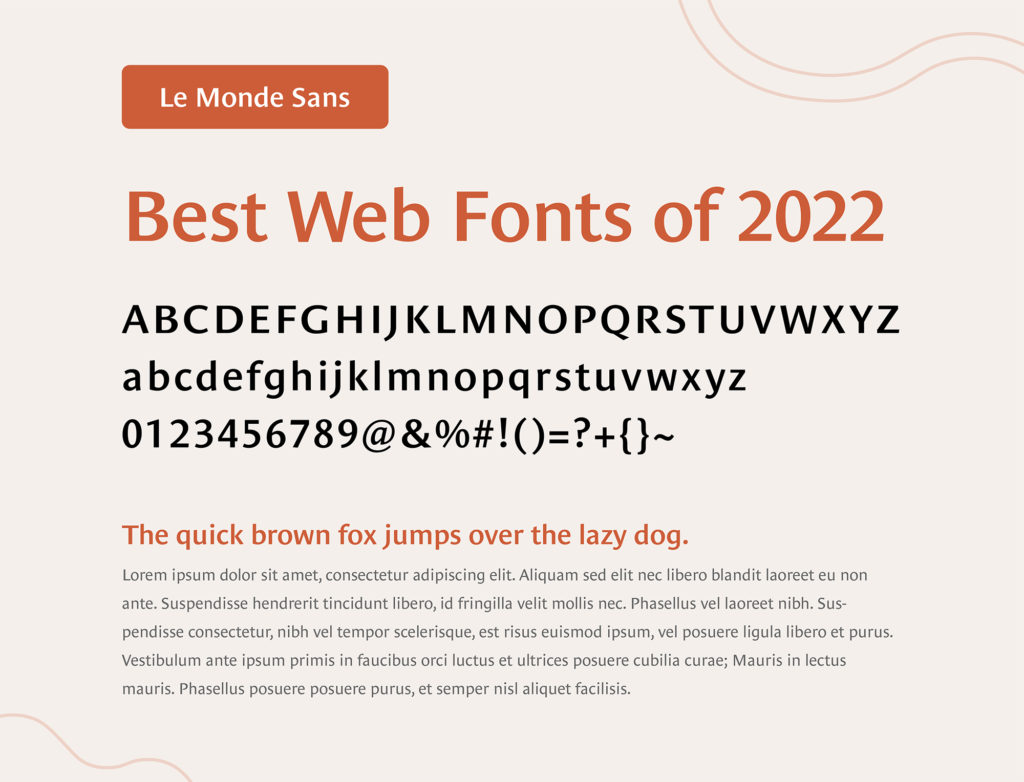
Le Monde Sans Best Web Font 2022

Le Monde Sans was originally designed for the French newspaper La Monde and is a humanist typeface, meaning that it has roots in calligraphy and emulates the warmth and connection of an actual human hand. Its style makes it appear almost like a serif font, adding a certain classiness to it, but the lack of actual serifs and low contrast makes it highly legible, especially on digital screens.

Designed by Jean François Porchez. Published by Typofonderie.

Find Le Me Monde Sans on Adobe Fonts at the link below:

Chillax

Chillax Best Web Font 2022

Chillax is a geometric sans typeface, inspired by 1920s modernism and Bauhaus style. It was designed mainly for display applications and headlines rather than smaller body text, allowing for its unique letterforms and lively personality.

Designed by Manushi Parikh. Published by Indian Type Foundry.

Find Chillax on Fontshare at the link below:

Add a valid URL to the block settings to get started.

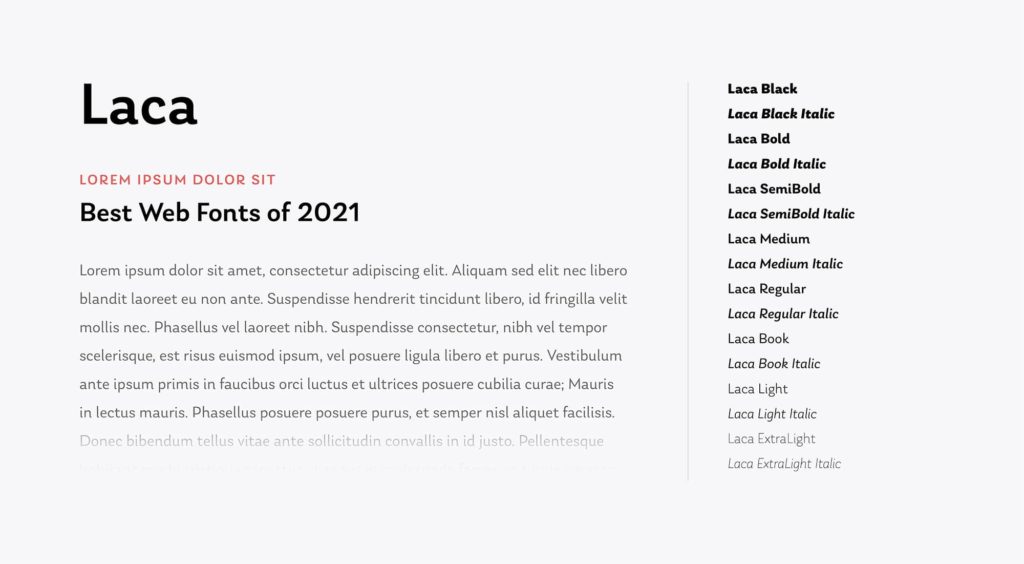
Laca

Though technically classified as a sans serif typeface, one might not be incorrect to label it a semi-sans. Its energetic and quirky style were inspired by retro Portuguese soap packaging, making it perfect for a brand looking to bring personality and warmth to their site. In fact, we love Laca so much here at Double Up Digital that we used it on our own website – check out our headings to see it in action!

Designed by Joana Correia. Published by Nova Type Foundry.

Find Laca on Adobe Fonts at the link below:

Roc Grotesk
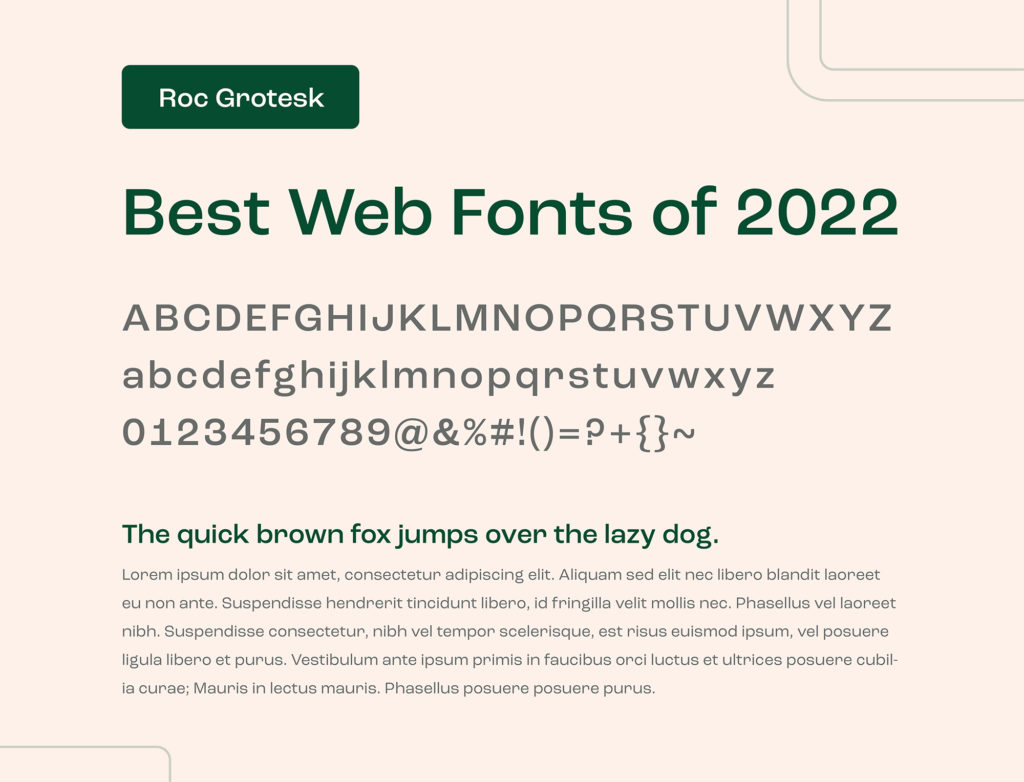
Roc Grotesk Best Web Font 2022

Roc Grotesk is a sans serif grotesque font that was inspired by 19th century American wood types. Like many grotesque fonts, its style is less “polished” and more “quirky,” giving it a lot of character and charm. While it’s less suited to smaller paragraph text, Roc Grotesk shines in display settings.

Designed by Nikola Kostić and Zoran Kostić. Published by Kostic Type Foundry.

Find Roc Grotesk on Adobe Fonts at the link below:

Filson Pro

Filson Pro Best Web Font 2022

Filson Pro is a geometric sans serif typeface with a twist. Its geometric shapes make it highly visible and versatile for viewing, while its distinctive details, such as the curved tail on some of the letters, add a surprising and playful elegance to the typeface.

Designed by Olivier Gourvat. Published by Mostardesign.

Find Filson Pro on Adobe Fonts at the link below:

Satoshi

Satoshi Best Web Font 2022

Satoshi is a modernist sans serif typeface, combining the typical grotesque style with geometrically-designed characters. Satoshi is great if you’re looking for a modern font that’s straightforward and beautifully clean without being boring. Because of its geometric leanings, it’s highly legible even at tiny sizes.

Designed by Deni Anggara. Published by Indian Type Foundry.

Find Satoshi on Fontshare at the link below:

Add a valid URL to the block settings to get started.

Interstate
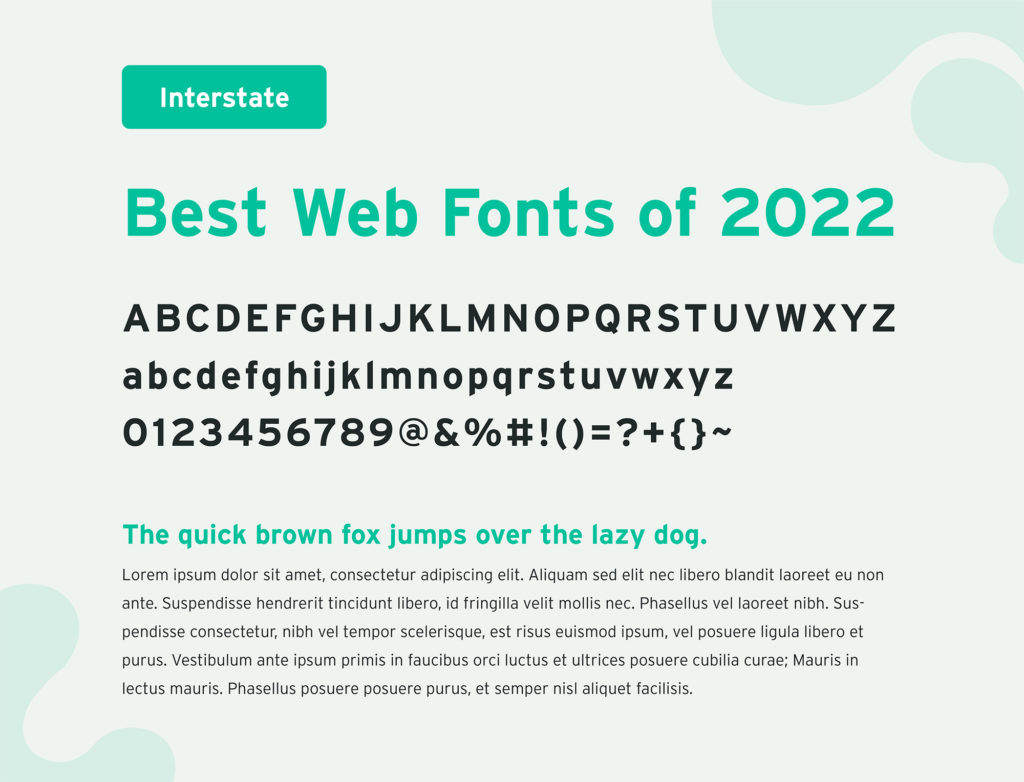
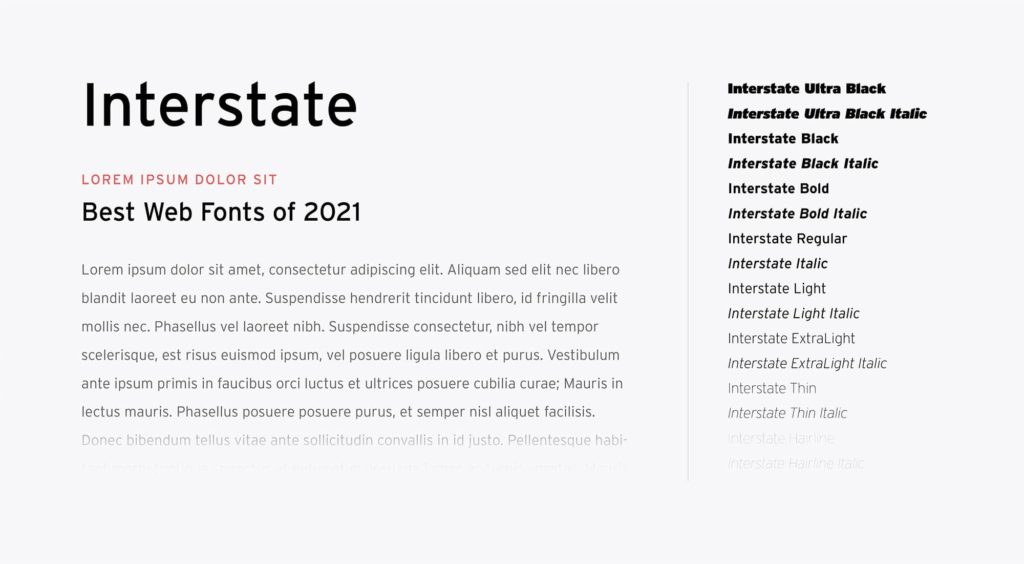
Interstate Best Web Font 2022

Interstate is another typeface that was on my 2021 list, and with its classic style remains a top font for 2022. Designed in the 90s, it was inspired by the type on US highway signs in the 1900s and so gives a classic and familiar feeling. Because it was designed to be read from a distance while traveling via car, it is highly legible and easy to read, especially at larger sizes such as headings and display instances.

Designed by Tobias Frere-Jones. Published by Frere-Jones Type.

Find Interstate on Adobe Fonts at the link below:

Red Hat Display

Red Hat Display Best Web Font 2022

Red Hat Display is another geometric sans typeface which was originally developed for the branding of Red Hat, an enterprise software company. With its circular structures and even lines, it has an open and uniform presence while still maintaining warmth. If you’re looking for even more legibility in body text, Red Hat also comes in a Text style.

Designed by Jeremy Mickel. Published by MCKL.

Find Red Hat Display and Text on Google Fonts at the links below:

Serif

Montagu Slab
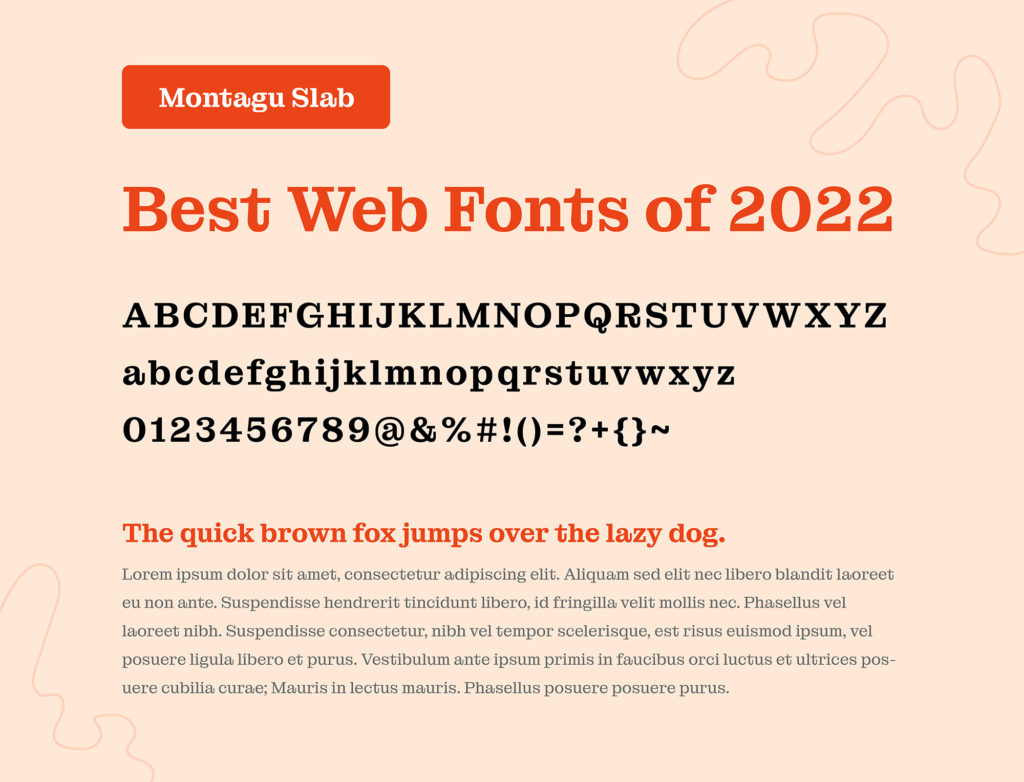
Montagu Slab Best Web Font 2022

Montagu Slab is a slab serif display typeface, drawing inspiration from the classic fonts of the 19th century. Its sturdy characters and bold style make it a great choice for a brand that is looking to be distinct and creative. Because of its high contrast and funky details, its best used in display and heading instances.

Designed and published by Florian Karsten.

Find Montagu Slab on Google Fonts at the link below:

Nocturne Serif
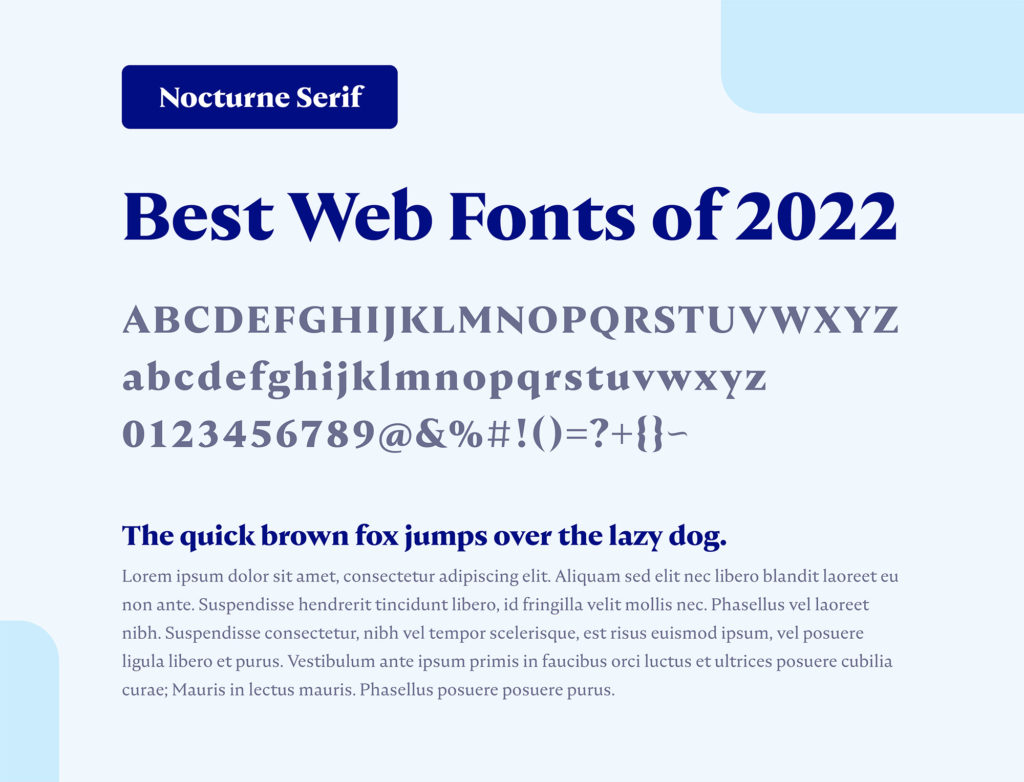
Nocturne Serif Best Web Font 2022

Nocture Serif is another good choice if you’re looking for an engaging serif font. Originally inspired by stone tablet lettering in Warsaw architecture and World War II memorials, it has a very classic, sharp, & substantial presence.

Designed by Mateusz Machalski. Published by Capitalics.

Find Nocturne Serif on Adobe Fonts at the link below:

Orpheus Pro
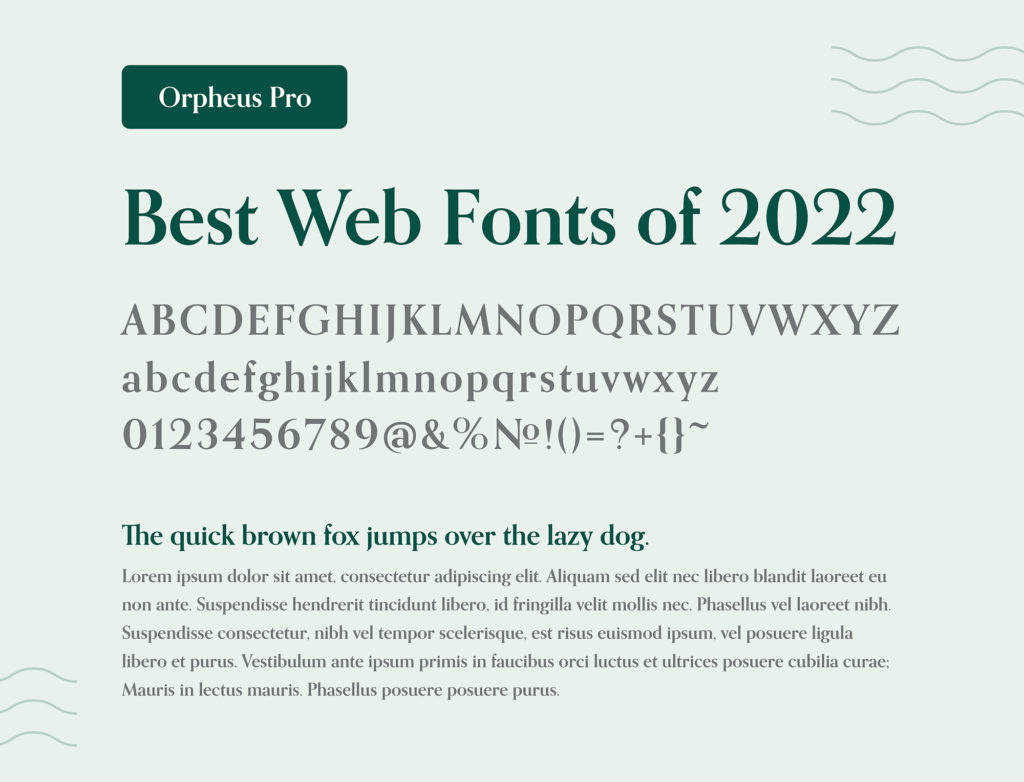
Orpheus Pro Best Web Font 2022

Orpheus Pro is a serif font inspired by the designs of Walter Tiemann in the 1920s. Its inspiration is based in the combination of classic Roman fonts with Art Deco styling, giving it a beautiful mixture of tradition and ornateness. Reminiscent of calligraphy, its flowing nature makes it an excellent choice for a brand looking to portray class and warmth.

Designed by Kevin King and Patrick Griffin. Published by Canada Type.

Find Orpheus Pro on Adobe Fonts at the link below:

Ivy Presto
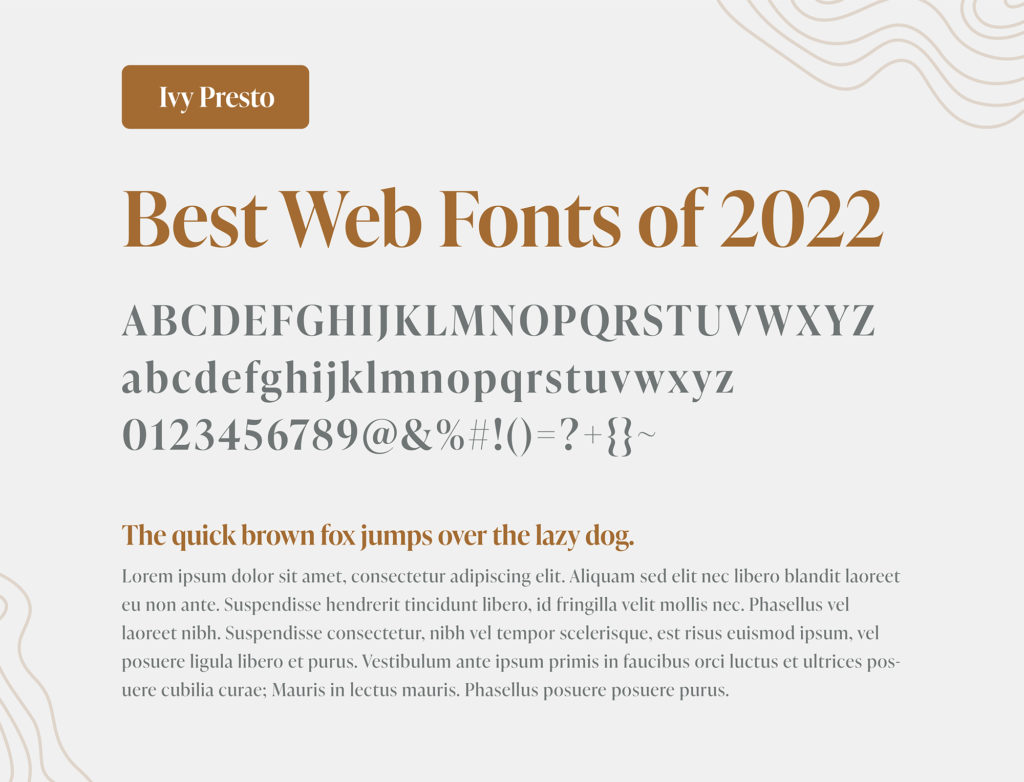
Ivy Presto Best Web Font 2022

Ivy Presto is an Old Style display typeface based off of the work of Hendrik van den Keere in the 16th century, revived with the intention of making it cleaner and crisper for the modern world. With its very high contrast, it lends itself best in display usages, and adds a graceful sophistication to designs.

Designed by Jan Maack. Published by Ivy Foundry.

Find IvyPresto on Adobe Fonts at the link below:
How to Know When It’s Time to Redesign Your Website

In today’s world, it’s very hard to deny the fact that your business’ website matters. But sometimes, it can be difficult to make the choice to move forward into a website redesign. You’ve likely spent a lot of time, effort, and money in the past to get your current website up and running, and the thought of restarting that process sounds like a headache waiting to happen. Is your current site really that bad?

It’s true that there are times when some simple updates to your site’s design or content are all that you need. A lot of times, however, your site truly isn’t serving your company or your customers well, and a full redesign is necessary. Problems on your website can lead to a loss of engagements, conversions, search engine rankings, and overall credibility – meaning that your company is missing out on business and growth in the long run. Not only does your website act as a visual extension of your brand, but it’s the touchpoint for all your digital marketing and sales efforts. It’s how your customers or clients connect with you, and how you connect with them.

So, how do you know when it’s time to invest in a redesign? Here are some signs.

1. Unfriendly mobile design

Having a responsive website is a “must” today, and not having one is the number one sign that your website needs to be redone. Responsive design means that your website responds dynamically to the device width of the user, so that your customers have a seamless experience no matter if they are looking at your website on a desktop, tablet, or cell phone. According to Statista, mobile devices (excluding tablets) made up 54.8% of internet traffic around the world in the first quarter of 2021, meaning that about half of your website’s traffic is likely coming from cell phone devices. A website that does not adapt to smaller devices is highly likely to lose these potential customers or clients before a connection can even begin to be formed. The good news is, quality web designers and developers know this and are highly focused on creating mobile-friendly websites all the way from design into build.

2. Your customers or clients are giving you hints

A sure sign that your website isn’t doing its job correctly is if your customers or clients are consistently having trouble. Analyzing the conversations that you or your customer service team have with your customers is a good way to identify issues on your site. Are they consistently unable to find answers to basic questions, having trouble with the checkout system, or saying that a form won’t load? Common questions such as these point to frustrating experiences for your customers that need to be addressed.

3. Outdated or inconsistent design

While design aesthetic might seem insignificant compared to content, the truth is that your website is the first impression that most potential customers will get of your business, and the things that they see will strongly determine whether they want to engage with you or not. Customers use digital platforms like your website to get an idea of the essence of your company, so an outdated or inconsistent style can leave them unsure about your company’s capability and expertise. If you’re unsure if your style is out of date, reach out to a professional or to those around you who are visually-inclined for their honest opinion – preferably those who are most similar to your target audience or who understand your target audience well.

4. It’s difficult to use

A customer’s experience on your website does extend beyond just the aesthetics – it’s also necessary to make sure your site is intuitive to use and easy to navigate. Have you ever been on a website that has left you frustrated, unable to find the information you’re looking for or confused about how to use it? This is due to poor user experience design. Sites like these lead to high bounce rates and poor conversion rates, meaning that people are leaving the site quickly without creating a lead for your company or purchasing a product. A great user experience understands the needs of your customers and thinks about their experience from the moment they land on your site all the way through to conversion. That understanding helps build a site structure and layout that is easy to navigate and fulfills users’ expectations – and in doing so implies good service and a trustworthy company.

5.  Slow loading times

Users today expect your website to load very quickly. According to research done by Google, as a page’s load time goes from one second to five seconds, the probability of bounce increases by 90%. Additionally, 53% of visits are completely abandoned if a mobile site takes longer than 3 seconds to load. Basically – if your site takes too long to load, you’re losing a large number of potential customers or clients. There are many factors that could lead to slow loading times – poor coding, unoptimized images, cheap hosting, unnecessary plugins, and more. No matter the cause, most users will be heading back to the search results and hitting up a different site instead of exploring yours.

6. Your content & styling no longer reflect your brand

Have you changed the direction of your brand messaging, services, or target audience, and your website no longer reflects what your company is about? It’s important to maintain consistency throughout all of your branding and content, so that your customers aren’t confused about what your company is about or wander off elsewhere because they aren’t aware you provide the service they’re looking for. The messaging about who you are and what you do, which is displayed in both content and design, is integral in creating a unique identity ­– this is what potential customers will remember and associate with your business.

7. You’re not getting the results you want

Your website ultimately exists to help your business do well and increase sales. As we discussed previously, the look and usability of your website are integral – however, if your site is beautifully designed and functional without helping you meet your goals or getting you the results you want, it’s not truly serving your business. If you’re unhappy with your site’s performance, it might be time to consider a website redesign. Professional web designers will be able to help you focus on identifying the problems with your current site that are hindering growth, and implement new strategies and techniques that will build up your brand.

After reading through these signs, do you think that you’re in the market for a website redesign? Our web experts at Double Up Digital would love to help you build a site that builds up your brand. Please also feel free to check out Double Up Digital’s DesignRush profile, too!

Best Web Fonts of 2021

It’s safe to say that 2020 has been a year that no one saw coming. The world is certainly a different place than it was last year, and with it, the way we work and interact in business has drastically altered. With many companies moving fully digital with quarantine, work-from-home, and a lack of physical presence, it’s more important now than ever that our online presence is looking fresh and relatable to users and will continue to be so in 2021. More than ever, websites are a key component of how we present ourselves and our clients to a digital world – and typography is at the forefront.

Font choice may seem like a secondary element to web design next to more obvious things like imagery and colors, but it actually plays one of the most crucial roles in the overall aesthetic of a site. It sets the tone, implies personality, decides legibility and readability, and either builds up or tears down trust.

So, if you’re looking to add some life to your website as we move into 2021, look no further. To save you time and energy, I’ve combed through Google Fonts and Adobe Fonts looking for some of the best web fonts for the upcoming year, and compiled the following list.

Each web font listed below can be found either for free on Google Fonts or are included in an Adobe subscription with Adobe Fonts.

Sans Serif

Laca

Let’s start off the list with a little bit of fun. Laca is a lively typeface that has a little personality without going overboard or becoming illegible. With a little retro inspiration, its curved nature and low contrast make it warm and approachable while keeping it versatile for digital platforms. Laca is an excellent choice if you’re looking for something friendly and charming.

Designed by Joana Correia. Published by Nova Type Foundry.

Get Laca on Adobe Fonts

Europa

Europa has been my go-to typeface over the past few months and will continue to be one of my favorites in 2021. Based off of two classics, Futura and Gill Sans, it mixes the best of geometric and humanist styles, bringing them together into one clean, dynamic, and easy-to-read typeface. It’s a great option for both headings and body text. The only negative about Europa is its limited options for font weights – you might come across a couple of instances where a Semibold font-weight would be nice, but the benefits of Europa far outweigh this downside.

Designed by Fabian Leuenberger. Published by EuropaType.

Get Europa on Adobe Fonts

Interstate

Interstate, aptly named, was inspired by US highway signage in the 1900s. It carries familiar and official-looking, yet slightly quirky, letterforms, making it professional yet unique. Due to its wide spacing and clearly-separated letters, it’s easily legible at a distance and therefore is most popularly used for signage, but these same features make it great for website headings and larger text. I would recommend its use in display settings such as these rather than for instances of extended body text.

Designed by Tobias Frere-Jones. Published by Frere-Jones Type.

Get Interstate on Adobe Fonts

Proxima Nova

Proxima Nova was on my list back in 2019 and still continues to be one of my most-used typefaces. As a hybrid font, its versatility is incredible and can be used in a great variety of projects as it matches well with many styles and other typefaces. Its simplicity makes it highly legible, clean, and modern.

Designed by Mark Simonson. Published by Mark Simonson Studio.

Get Proxima Nova on Adobe Fonts

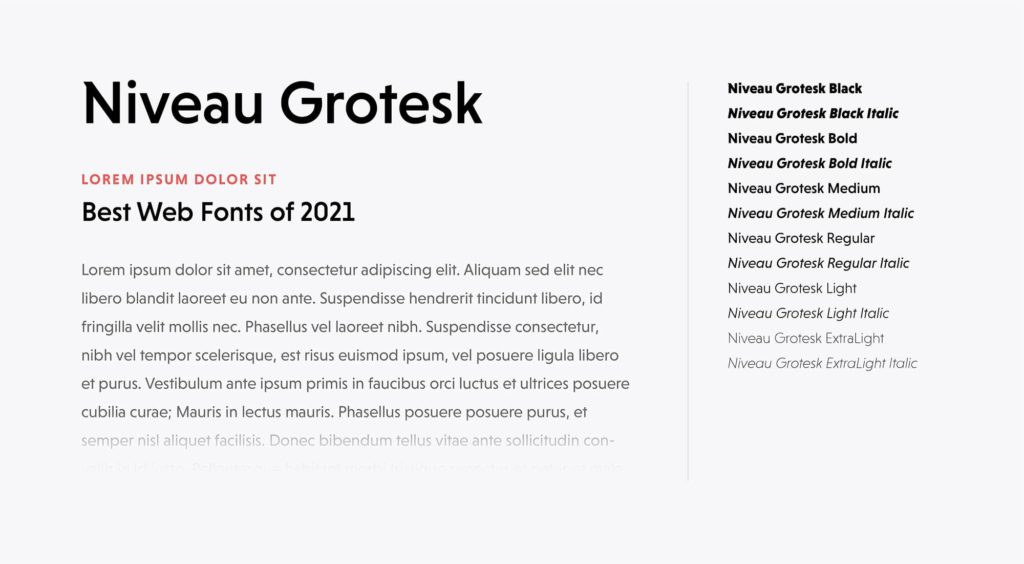
Niveau Grotesk

Niveau Grotesk brings 19th-century classical typefaces into the modern world – the unique letterforms and slight ornamentation call back to the extravagance of these classical typefaces while scaling them back and smoothing them out to create a typeface suitable for reading on modern screens and smaller reading sizes. Nivea Grotesk definitely has a style and boldness of its own but holds back enough to make it versatile for both display and body text.

Designed by Hannes von Döhren. Published by HVD Fonts.

Get Niveau Grotesk on Adobe Fonts

Soleil

Soleil is a fresh take on a geometric typeface, with a more fluid and flexible style than one typical finds among geometric typefaces. It combines simplicity with clarity, bringing to life text that feels energetic and easy on the eyes.

Designed by Wolfgang Homola. Published by TypeTogether.

Get Soleil on Adobe Fonts

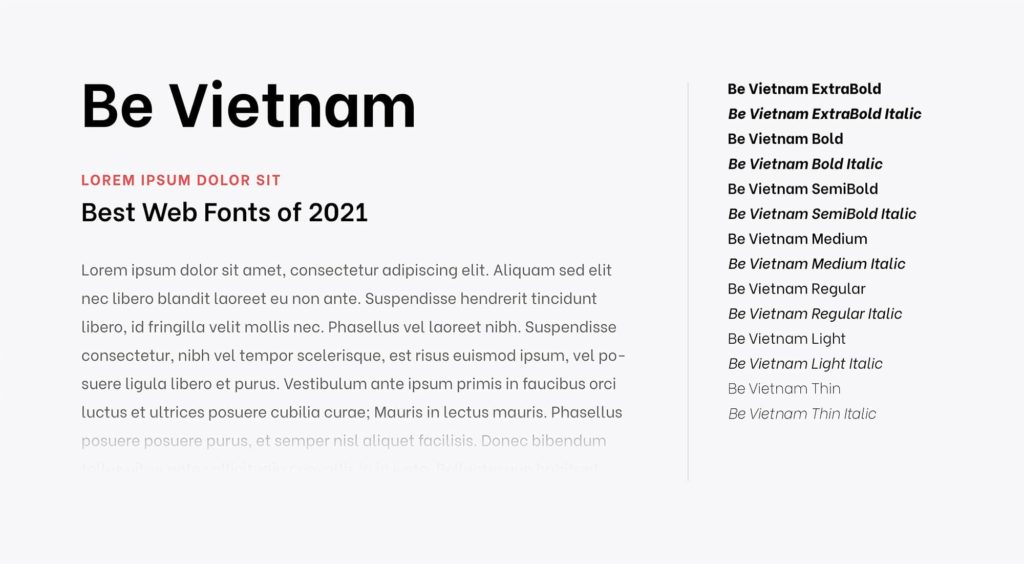
Be Vietnam

Be Vietnam is a youthful and modern typeface, mixing a modern styling of the technological age with a spirited styling that calls back to the natural feeling of hand-drawn lettering. Friendly, fun, and inviting, Be Vietnam is a font that is both unique and functional.

Designed by Gabriel Lam. Published by beGroup Vietnam.

Get Be Vietnam on Google Fonts

Serif

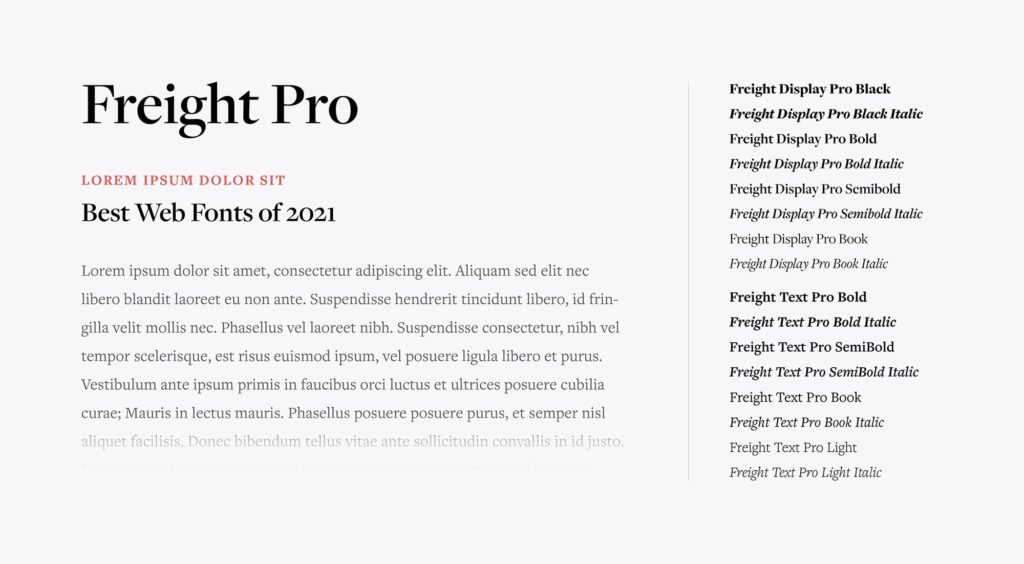
Freight Pro

Freight Pro is a superfamily of fonts, making it a great choice if you’re looking for a versatile typeface with an extensive character set. Pair Freight Display Pro for headings and larger text with Freight Text Pro for body font.

Designed by Joshua Darden. Published by GarageFonts.

Get Freight Text Pro on Adobe Fonts
Get Freight Display Pro on Adobe Fonts

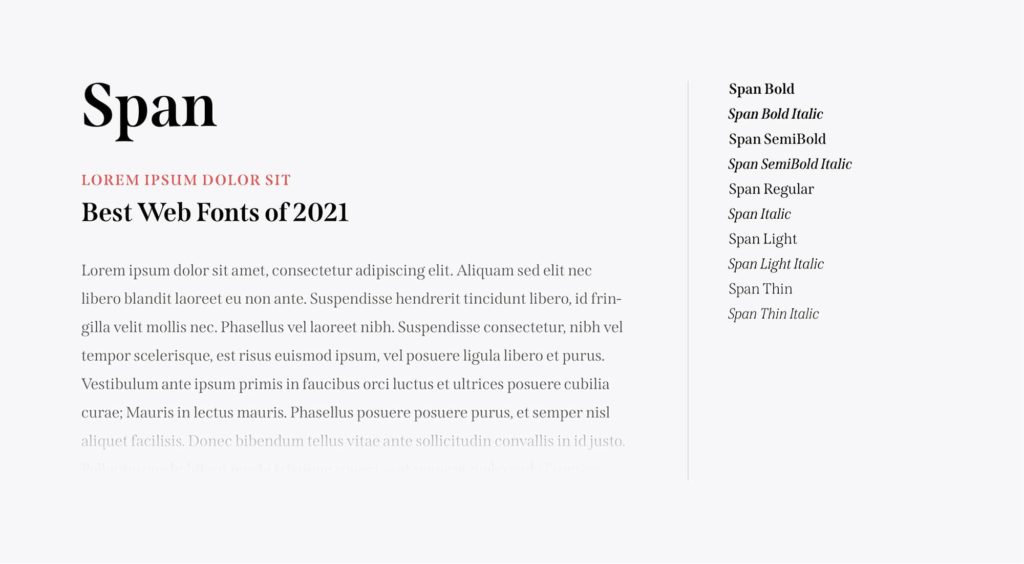
Span

Span is inspired by the engraved fonts of the 19th century but evolved for modern digital use. Sculptural and expressive, it creates a unique and elegant aesthetic.

Designed by Jamie Clarke. Published by Jamie Clarke Type.

Get Span on Adobe Fonts

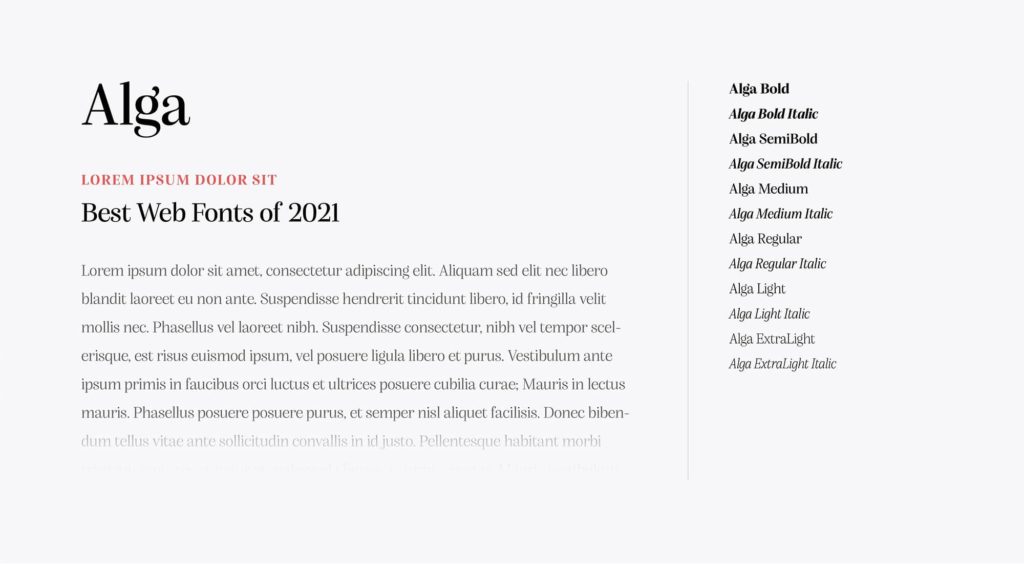
Alga

Alga is a lively high-contrast serif typeface. If you’re looking for a serif font with a lot of personality and charm, this is a great choice. Since it’s high-contrast, it’s best used in headings and large text rather than extended body copy.

Designed by Joana Correia. Published by Nova Type Foundry.

Get Alga on Adobe Fonts

Unna

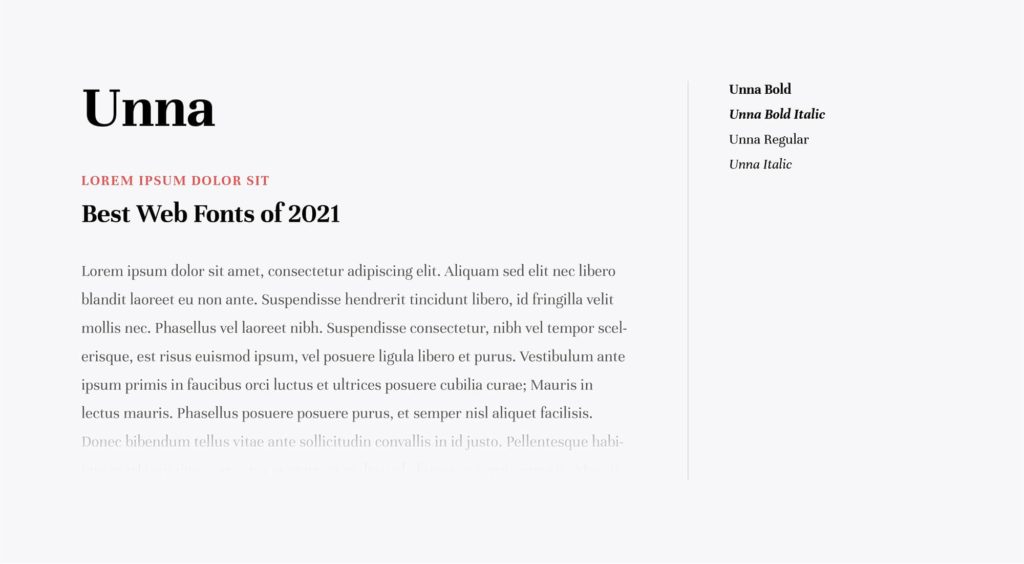
Unna is a neoclassical typeface, meaning it has a more solid presence. It combines soft serifs with strong stems to create a feeling of elegance and friendliness. Unfortunately, there are only 4 font weights available on Google Fonts for free, but if you’re looking for more versatility, there are Light and Medium weights available for purchase elsewhere.

Designed by Jorge de Buen. Published by Omnibus-Type.

Get Unna on Google Fonts

Minion Pro

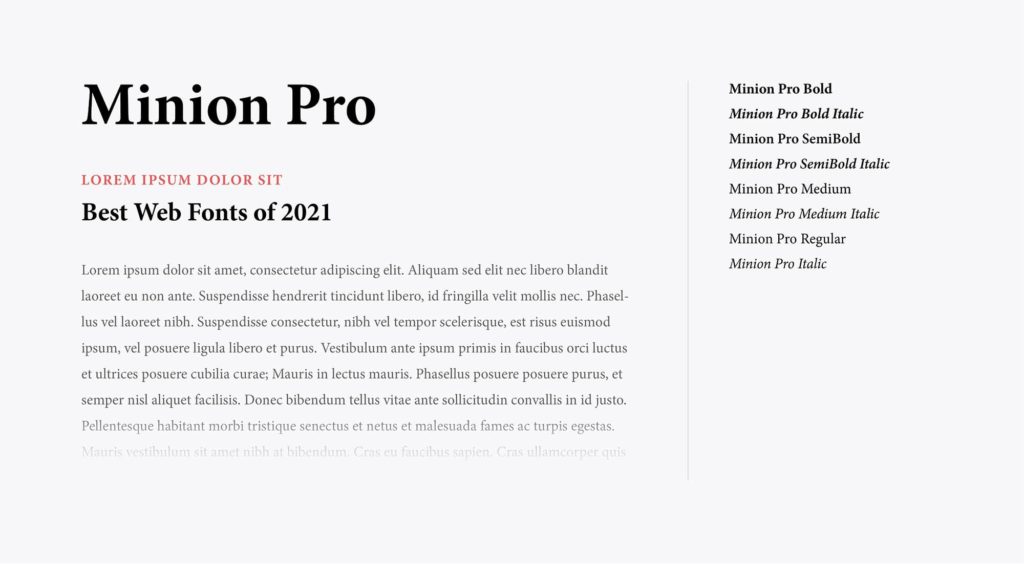
Minion Pro is a staple if you’re looking for a simple serif typeface. Classic and clean, it’s easy to read and straightforward, so it won’t distract from the content. Designed for body text and extended reading, plus its large library of font weights and characters, makes it versatile and usable for any occasion.

Designed by Robert Slimbach. Published by Adobe Originals.

Get Source Serif Pro on Adobe Fonts
Get Source Serif Pro on Google Fonts

4 Web Design Elements The Best Sites All Have in Common

Your website is hands down one of the most important assets for your business. Even if you don’t conduct much of your business online, your web pages are often the first step when someone is showing interest in connecting with you. In essence, it’s where first impressions are made, and you can trust that what someone finds when they land there is going to leave a lasting imprint on the perception they have of your business. Continue reading to learn more about common web design elements that improve user experience.

So, you build a great website. Simple enough in concept, not always that easy in reality.

Critical Web Design Elements

There’s so much that goes into great web design. There are also plenty of platforms out there that seemingly make it easy to build a high-quality website in the blink of an eye. Unfortunately, while these sites might look good, they don’t always perform the best. This sends you right back to the drawing board, trying to figure out when and where everything went wrong.

The internet is filled with sites that perform, and those that don’t. We know which category you want to be part of, the question is how to get there. A good starting place is to look at some of the businesses that have the best website design and take a few notes on what they’re doing differently. They say that imitation is the sincerest form of flattery, so take some inspiration from this list of elements the best website have in common and implement them into your own web design.

b2b website design with premium UX design

Mobile Responsiveness

At this point, if you don’t have a site that’s optimized for mobile you’re losing out on the opportunity to connect with a significant amount of traffic – especially if have a locally owned business. You won’t find a successful website anywhere that hasn’t been designed to cater to the mobile consumer.

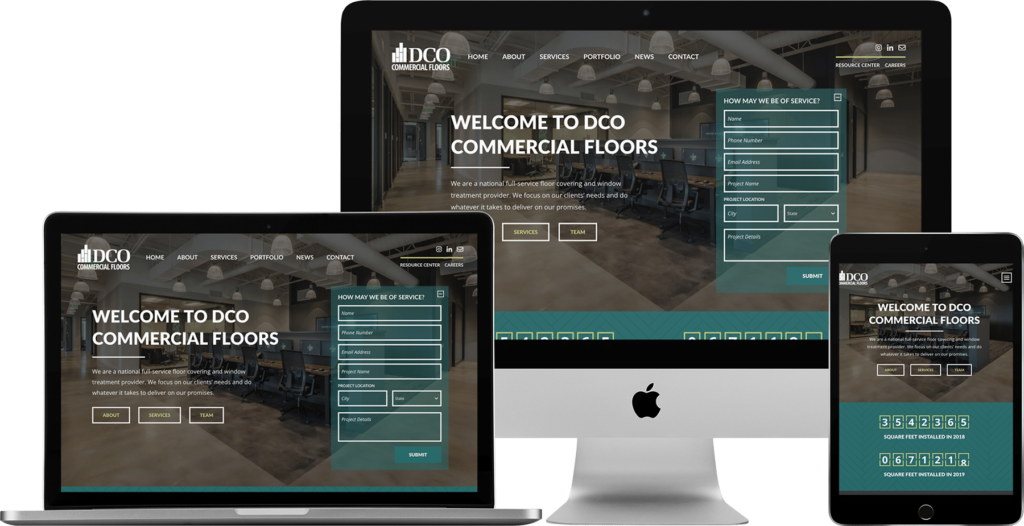
Mobile optimization looks a little different today than it did just a few years ago. Today, it’s about not making the assumption that you know which device and what size screen your audience is using to connect with you. Mobile devices alone are available with a range of screen sizes. Now factor in tablets, notebooks, laptops, desktops…. you get the picture. The best websites are designed to provide a cohesive, seamless experience regardless of the size of the screen the visitor is looking at.

Responsive design makes this possible. A responsive design automatically optimizes your website for whatever size screen it’s being accessed through. This optimized speed (which we’ll get to in a minute), as well as ensures your site is easy to navigate for every visitor, every time.

Loading Button On Keyboard symbolizing page load speed as a critical web design element.

Page Load Speed

The last time you searched for something online, how many results did you see? Of course, the results on page one got your immediate attention but there were likely hundreds of thousands (if not more) results behind those. Chances are you had no shortage of options, and neither does your target audience.

With so many options, why is a search engine user going to stick around on a slow loading site when they could just as easily, and quickly, back out and visit a site that loads in an instant? Combine this with a decrease in attention spans and the need for speed becomes obvious.

The most successful websites recognize this and spare nothing in making sure their visitors don’t wait. The reality is that just a few second delay in load time causes bounce rates to go up, and it’s incredibly difficult to recapture a website visitor that left based on a less than optimal user experience. Optimizing your site for speed is essential. This involves building sites with responsive design, as mentioned above, but also taking into consideration the other elements of web design that can slow your site speed down to a crawl – such as unoptimized images.

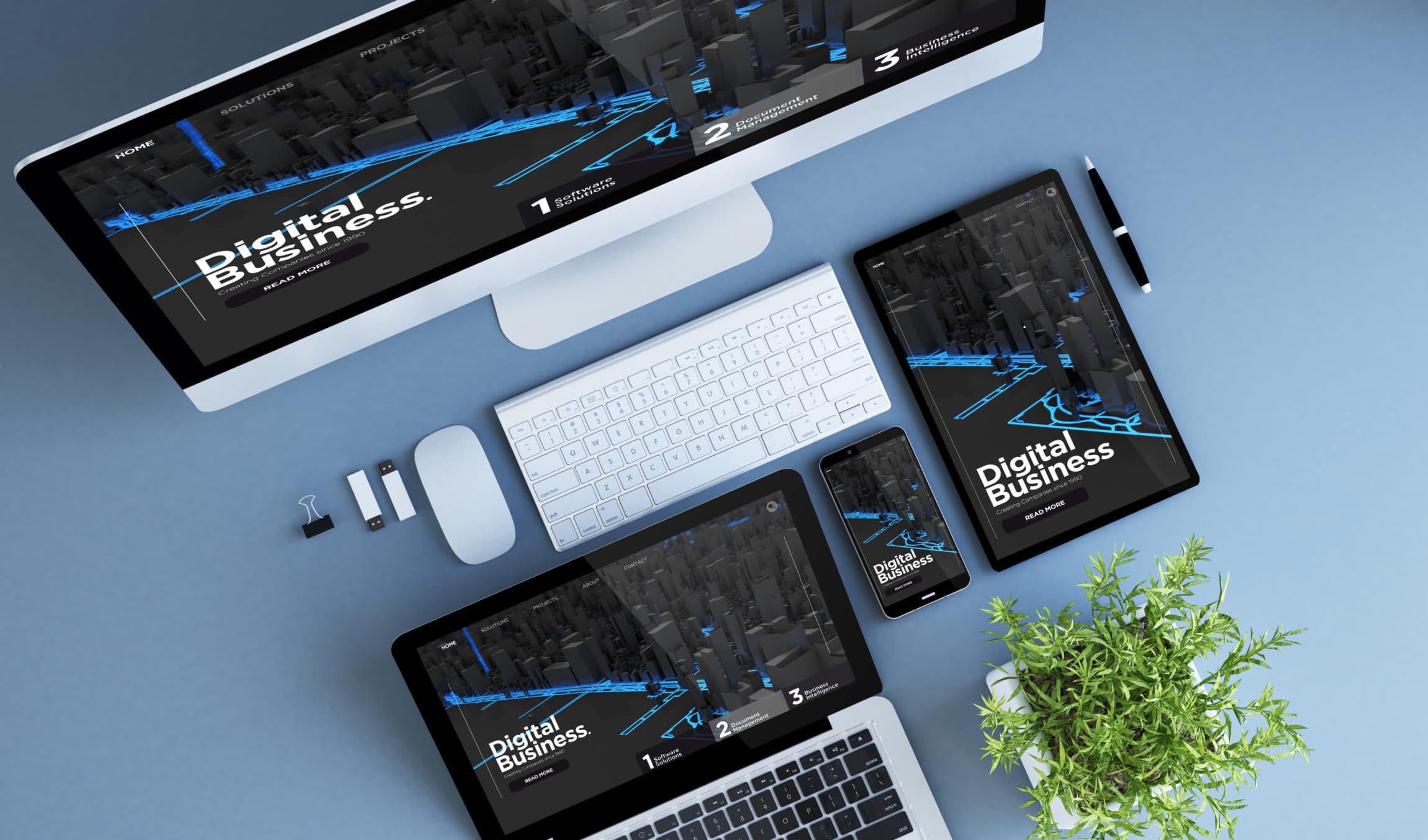
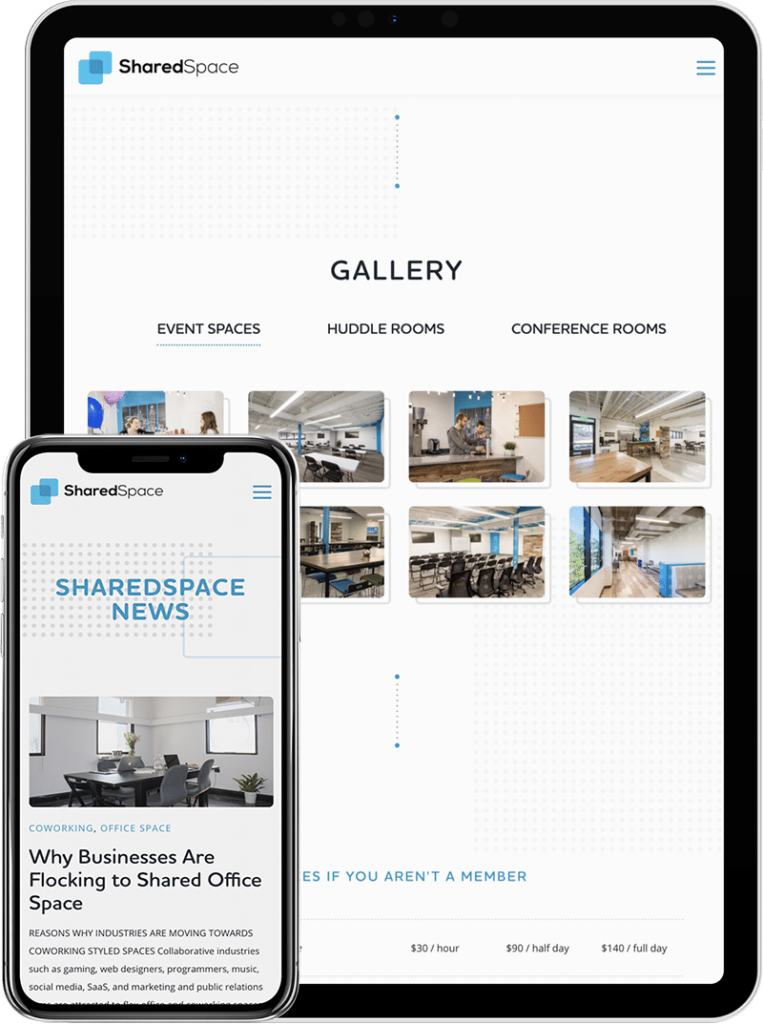
Electronic devices displaying responsive mobile web design elements.

Brand Identity & Fluidity

Each page of your website serves a different purpose, but that doesn’t mean it should look completely different. It’s important to deliver your brand identity seamlessly throughout each webpage so that your audience isn’t left with a confusing image about who you are as a brand or what your mission and values are.

Cohesive brand identity also helps to establish trust, credibility, and authority in your industry. This involves a lot more than just slapping your logo in the corner of each page. Web design companies and experts can help infuse your brand through your entire site, while still distinguishing each page and encouraging further exploration. This can be accomplished through a combination of web design elements, like colors and graphics, but also through a content strategy that supports your brand image.

High-Quality Content

By looking at some of the best websites it’s easy to see that great content is a common link. Content is pretty much the most efficient vehicle you have for connecting with your audience and enhancing search engine optimization results. You already have a blog on your website, so all is good, right?

The best websites belong to businesses that understand the real purpose of content, and that’s to provide exceptional value to their audience. Just posting some blogs for the sake of having content on your site isn’t enough. A content marketing strategy is essential for creating content that adds real value for each visitor that lands on your site.

This might include authority articles on topics that are of key importance to your audience. It might also mean diving into video content that instantly captures the attention of your audience and engages them. Content also includes all the text, video, and images that are on every single page of your site. A content marketing strategy that considers how to best reach and engage your audience – such as leveraging local SEO and geographically relevant keywords – is key to generating traffic to your site. By combining digital marketing and web development, our agency is positioned to help you create and design around content that will resonate with your users.

Web Design Elements & Development Experts

Optimizing your website to perform at the same level as those with the best web design can seem a little overwhelming at first glance. The good news is you don’t have to tackle it yourself, especially when there’s a digital agency in Atlanta that’s ready and willing to step up to the plate with a  results-driven approach to web design for your business. Contact Double Up Digital to discover what we can do to enhance your web presence and create a website that other businesses will want to emulate.

How UI & UX Design Impact Today’s Businesses

The website you’ve devoted so many resources to building has one main goal at the end of the day – to generate revenue for your business. This is the end goal, but there are a lot of actions that take place between the first time someone lands on your website and the moment they decide that you’re product or service is worth taking a risk on. Your website serves as the roadmap for each of these actions, or at least it should. UI & UX design are critical components of that roadmap.

According to Design Rush, The best-rated user experience designers create a highly-functional website, mobile app or online platform for clients. In this blog, we’ll discuss what goes into successful UI & UX design and what you can do to improve your current website.

b2b website design with premium UX design

Today’s digital consumer has some pretty high expectations when it comes to their experience when they engage with a website. It really isn’t enough to just have a site that looks good, it also needs to perform and contribute to seamless conversions for your business.

We could spend all day talking about how this happens, or we could wrap it up in a nice little package called UI/UX – otherwise known as user interface and user experience. These have been buzzwords in the digital landscape for a while now, but they’re different today than they were a few years ago. Let’s look at how UI/UX has evolved for 2019’s digital consumer.

Are UI and UX Design the Same?

The short answer here is no, they aren’t. UI involves improving the functionality, interactivity and overall presentation of your website or mobile application. It’s all about how your website interacts with the person who’s using it. Think along the lines of tangible elements, like page architecture, call to action buttons and impactful visual elements.

UX is something a little different. UX encompasses the entire experience of the person visiting your site. This includes the aesthetic appeal as well as functionality, and much of it is influenced by the energy put into UI. The average digital consumer doesn’t have much of a background in UI, but they do know quite well how they feel about engaging with a business website. Click here to learn more about the differences between UI and UX.

UX design team working on a website design.

The State of UI and UX in 2019

With the definitions out of the way, we can turn our attention to how these two have evolved to where they are today. Rather than looking at these components separately, today’s approach to UX/UI development is more combined and cohesive. We’re understanding more about how each of these on their own contributes to more positive interactions with the digital audience and how they work together to enhance those interactions even further.

For instance, today’s businesses need to look at their audiences and think of each person as a potential lead. UI development is a key component in creating websites that compel the modern consumer. Think along the lines of compelling visuals and animations, along with sites that have an architecture that works seamlessly on mobile devices.

UX has become the focal point of the digital experience. As more of our interactions are happening online, we need a way of fusing an emotional connection and supplying those “feel good” emotions that used to come through face to face interactions and brick and mortar shopping experiences. An experience that’s free of glitches and frustrations, while enhancing the entire interaction is one of the top things the modern digital consumer is looking for.

Putting UI and UX Design Together in 2019

You need a strategy to generate the most success for your business online. We’re the digital experts that can help you cultivate an online presence through strategic UI and UX design. There’s no time to waste in enhancing the experience visitors have with your website. Contact Double Up Digital and discover how we can elevate your brand in the digital space today.

Why Testimonials Are Critical to Succesful Web Design

Building trust with your audience is an important part of growing a business. Cultivating an online reputation is key to establishing trust within target markets. This seems straightforward enough, but no business is born with a ready-made reputation. It’s a lot like trying to secure a car loan with no credit history – someone will eventually take a chance on you, but until then, proving yourself can feel like an uphill battle. Testimonials are one way that businesses can establish the type of credibility they need to succeed in a world where word of mouth is primarily digital.

Are Testimonials That Important?

Still, generating testimonials and featuring them in your web design or on social media is a bit of work, especially for new businesses with limited exposure. For them, the question quickly becomes whether testimonials are worth the trouble. The answer is yes, they are, and here’s why.

Testimonials Are Subtle

Take a look around the online world and you’ll notice that audiences are bombarded by businesses to the point they’re overstimulated. You personally have no doubt been the victim of a retargeting ad that follows you around the internet relentlessly. While this type of marketing strategy has its place, it can get old real fast to the consumer that just wants a break from businesses with overly disruptive ad strategies.

Testimonials have the power to “sell” your business without you needing to do much at all. Testimonials are a subtle, non-intrusive way of placing your business in the best possible light – right where your audience can see you.

When a visitor lands on your site, they’re looking for validation that you’re going to deliver on your promises. You could tell them how you follow through via a blog or video, but of course, you’re going to talk yourself up. On the other hand, testimonials allow visitors to see you through the eyes of previous customers. They’re a subtle and believable way of establishing the credibility new leads need.

Reputation Always Wins

Is not having any testimonials to vouch for your business better than the competitor down the street with a less than stellar reputation? Well, it depends on how “less than stellar” their reputation really is. If a business has a one-star rating over hundreds of reviews, chances are they aren’t going to stay around long – however, this is a rare occurrence.

Most businesses who’ve put some effort into search engine marketing and local SEO generate a fair amount of reviews, and it’s inevitable that a few unsavory ones are going to find their way into the mix. In this case, the competitor does likely have an advantage simply because people know what to expect.

Customers are often more likely to invest in businesses with not so great reviews because they’ve identified their weak points and have accepted the risk/benefit ratio. Your business with no reviews or testimonials is still an unknown – and that’s a risky venture.

Start Building Your Online Reputation Today

Including testimonials in your web design is an incredibly effective strategy for boosting your SEO campaigns. If you’re ready to get people talking and start building a reputation for yourself online, we’re here to help. Double Up Digital is the search engine marketing and website design company that can help you elevate your digital presence. Reach out to Double Up Digital today to learn more.

What’s the Difference Between UX and UI Design for Business Websites?

We’ve all been there at one point or another. There’s so much to learn about marketing your business online, and as you roll up your sleeves you’re bombarded with buzzwords and acronyms that all seem to blend together. How on earth are you ever going to succeed with search engine marketing when you can’t even keep the terms straight? Luckily, we’re here to break down the difference between UX and UI as they relate to design for business related websites.

For a few years now, UX (user experience), has been one of those buzzwords flying around the industry. UX has become a primary focus of search engines and for creating meaningful connections with audiences.

The concept of UX is complex enough on its own, but then another player called UI (user interface) has entered the ring and now you’re left unsure about the difference between the two and how each play into your web design.

It’s time to clear the clouds of confusion. Here are the basics of UX and UI design for building a successful presence online.

The Basics of UX Design

UX is short for user experience, which is essentially the overall measure of usability and enjoyment a visitor receives when they interact with your website design. If this sounds a little elusive, it’s because it is.

UX is the measure of the whole of an experience but there are many components to this. Anything that adds to the visitor’s experience is considered good for UX. From the perspective of modern website design, features like speed, usability, simplicity and visual appeal win points.

When businesses are thinking about UX design, they need to consider who their target market is and what types of features matter from a usability standpoint and how to provide ultimate value through web design.

How Is UI Design Different?

UI design involves the actual interface of your website. You can think of it as being a more tangible component of UX. For instance, simplicity in navigation is important for UX. UI design focuses on building a site architecture that streamlines navigation and adds to the user experience.

The end result of UI design is a website that has the look, feel and usability that appeals to the various elements of UX.

Which Is More Important for Web Design?

This is a question that can’t really be answered. The truth is they are both equally important components of your digital strategy and at the end of the day should be viewed as complementary elements that can be leveraged to work together.

Think of it this way. A website that looks great, but functions poorly isn’t going to win you any leads or conversions. Likewise, no matter how great your site functions, you’re not going to get the engagement you need if it’s lacking visually. A combined approach of UI/UX design guarantees that you have the best of both worlds.

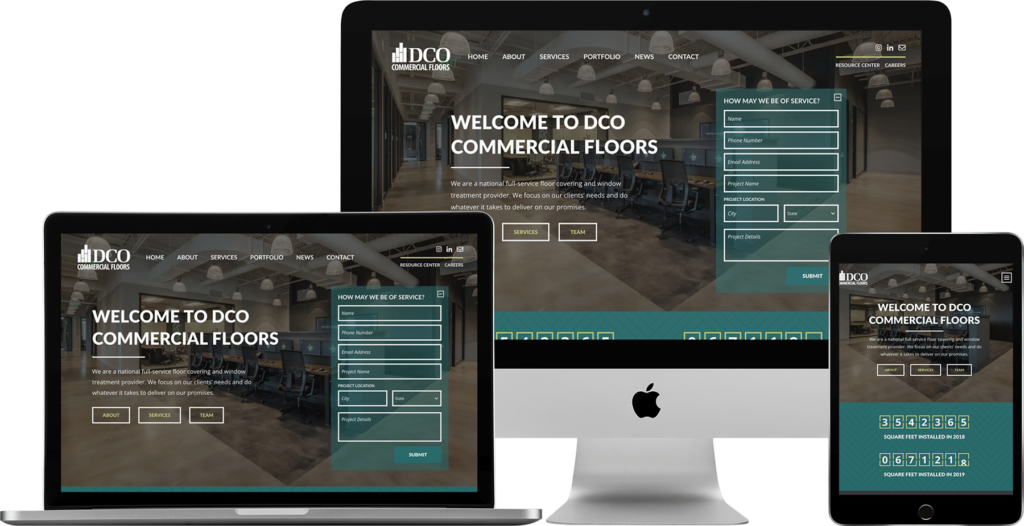
Various devices displaying UX/UI web designs.

Refresh Your Website Design with UI/UX Design Today

Now is the time to freshen up your website with UI/UX design that’s focused on producing conversions for your business. Double Up Digital is the team of web designers that can help. We know the ins and out of both UI and UX design and how they work together for businesses just like yours. Contact Double Up Digital to learn more about our web design services today.

5 Web Design Trends to Build Your Business in 2019

It’s the start of a brand new year, and with that comes a fresh perspective on how you’re going to grow your business. You already know that a professionally developed website is non-negotiable, but do you know what that means in 2019? The beginning of the year is a great time to look at the website design trends and consider how you can update your website to meet the expectations of your audience. Here are five web design trends that matter most to consumers in 2019.

Critical Web Design Trends in 2019

Desk with multiple devices on it. All devices have the same website up showcasing responsive web design.

Speed and Responsiveness

You’ve probably already heard that speed is a critical element of your website design, but this year, you can expect to have the concept drilled in even deeper. With Google’s recent algorithm updates and focus on a mobile-first index, web development that hasn’t taken speed and mobile responsiveness into consideration will fall flat.

2019 is going to be all about designing your website to appeal to the comfort and usability of your visitors, a growing number of which will be coming from mobile devices. Speed and responsive design need to be at the top of your list this year as they have become a staple of web design trends.  

Neat and Tidy

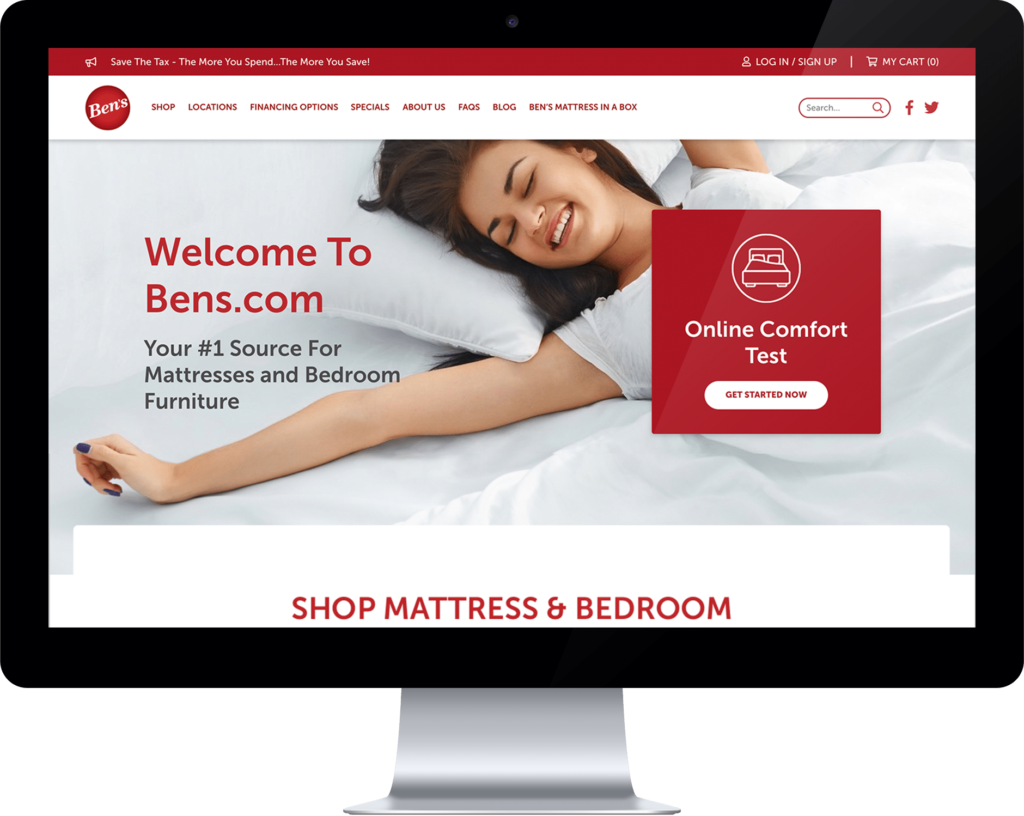
This image has an empty alt attribute; its file name is Bens-mockup-1-1024x816.png

This year, we’re going to see some fluctuations in the visual appearance of websites. Some are going for bold color or asymmetrical graphical elements. All of this will help to break up the monotony of the push toward neutral, clean design in previous years.

Even with this new aesthetic direction, clean and tidy will be the commonalities between high performing websites. Think along the lines of ample blank space for the eyes to rest, easy navigation and content that’s easy to consume from mobile devices.

Background Video

When visitors land on your website, they’re expecting something to capture their attention. If what you’re showing them is an endless wall of text, you’re going to see your bounce rate skyrocket in 2019. Today’s consumer wants to feel visually engaged, and few things accomplish this goal better than background video.

Background video can tell the story of your brand without blocks of text to break up the visual appeal of your web design. This element is going to be a powerful tool on single page web designs, which are also trending this year.

AI Technology and Chatbots

chatbot answering questions online, robot assistant help on website

As AI technology has become more sophisticated and accessible, more businesses are going to be using it to better connect with their visitors, and we’re going to see more chatbots with capabilities of providing the visitor with human-like conversation make their way onto websites this year.

Gone are the days of flat, robotic AI technology and chatbots that did little more than annoy your visitors. Today’s chatbot is intelligent and contributes to a more personalized experience.

Personalization

Speaking of a more personalized experience, site visitors are expecting more out of you concerning personalization than ever before. Features that web designers have previously used primarily for e-commerce sites are going to become more popular across all industries. Look for customization to include elements that encourage movement along the sales funnel by turning each visit to your site into a continuation from last, essentially creating a customer story that ends with a conversion.

Web Design Trends & Trendsetters

We’re excited to see what’s going to happen in the world of web design in 2019. By staying current and even creating our own web design trends, our firm has the knowledge and expertise to help your business grow in the digital frontier. Contact Double Up Digital and speak to one of our expert web designers today.

Best Web Fonts of 2019

2019 is bound to be the most digital year we’ve experienced so far. Just think about it: we are only half a month in, and already a photo of an egg has gone viral and received a record-breaking 45 million Instagram likes (so far). It’s clear that people are online more than ever – so when it comes to web design, the choices you make are important. One of the most critical pieces designing a website that will create the aesthetic you need and ensures an optimum user experience is font choice. Keep reading to learn more about the best web fonts to use in 2019.
There are literally thousands of options when it comes to choosing a font for your web design project. Opening up Google Fonts or Adobe Fonts (formerly known as Typekit) can be very overwhelming and can make the task seem daunting. So, to help you out and make life a little easier, I’ve put together a list of some of the best 2019-approved web fonts available from Google and Adobe.

All the fonts in the list below can be found either for free on Google Fonts or are included in an Adobe subscription on Adobe Fonts.

Sans Serif


Proxima Nova

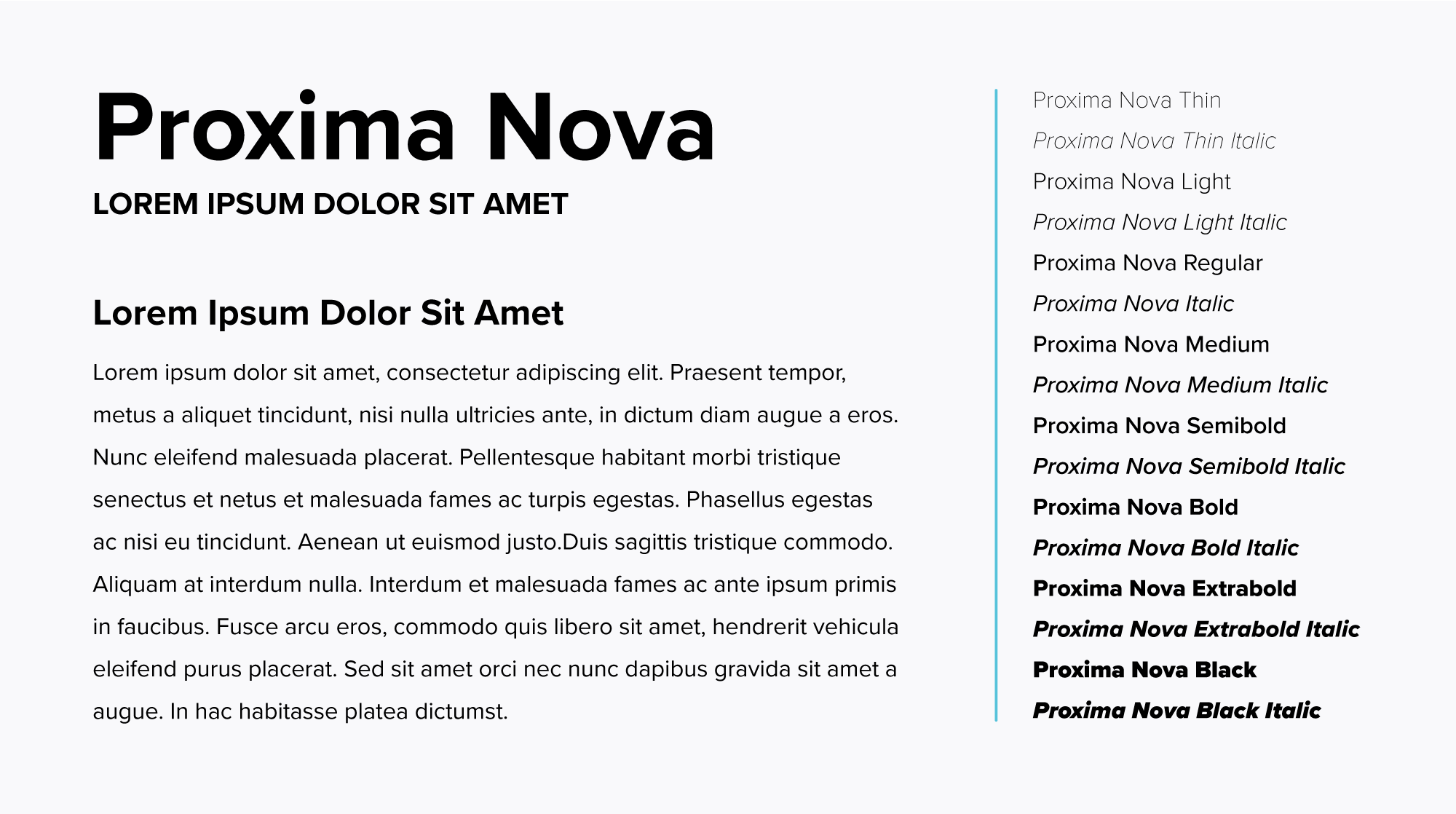
Proxima Nova is one of the hottest fonts in web design right now, and will continue to be one of the most prominent in 2019. It is the perfect example of a modern typeface that is based in geometric elements. If you’re looking for a sleek, easy-to-read typeface that has a little more pizzaz than Helvetica, Proxima Nova is the way to go.

Proxima Nova was designed by Mark Simonson Studio and released in 2005.

Find it here on Adobe Fonts

Ubuntu

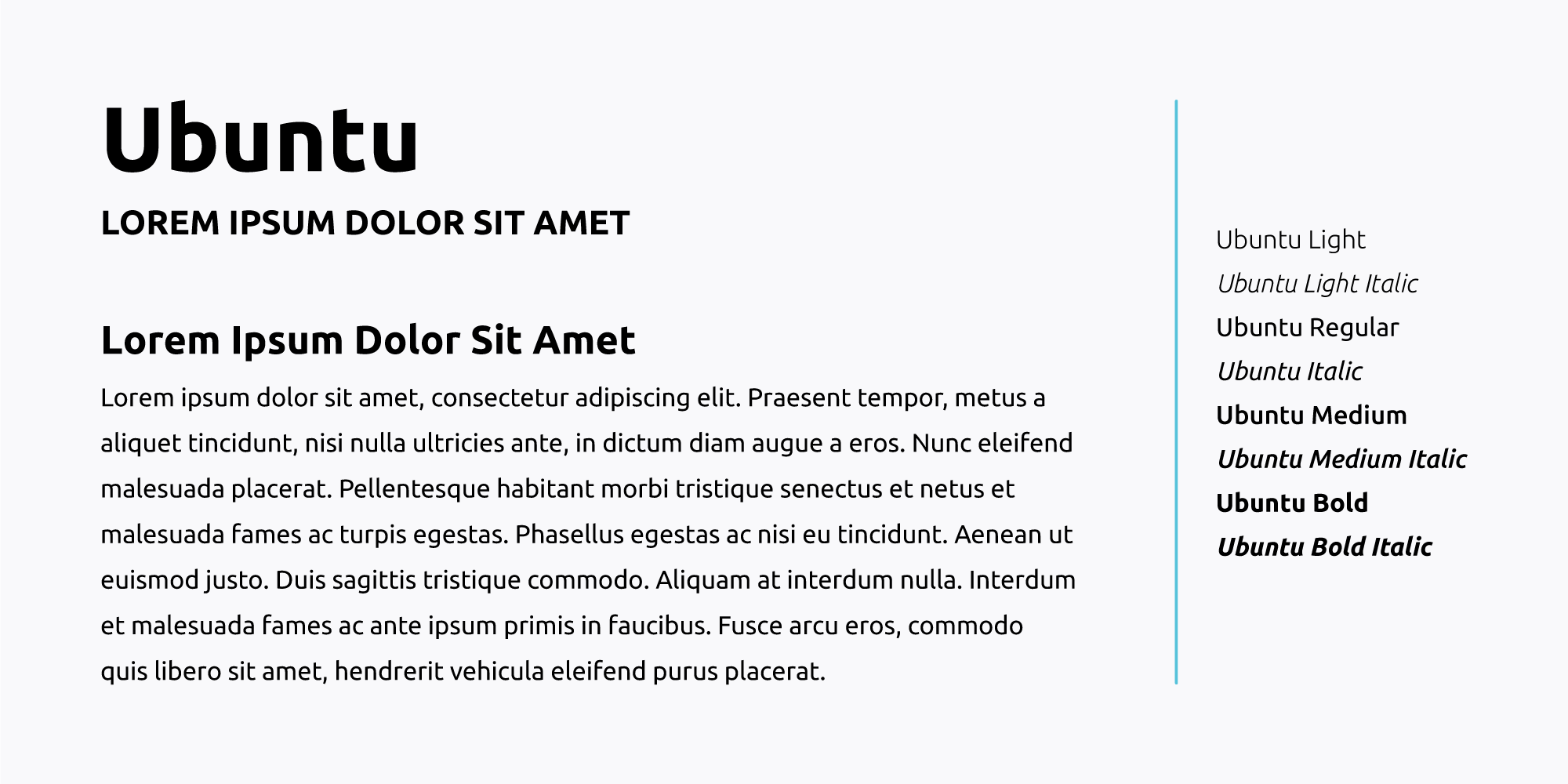
Ubuntu is a great choice if you’re looking for a distinctive contemporary typeface with slightly rounder features. Designed with the digital world in mind, it is versatile and highly readable on screens.

Ubuntu was funded by Canonical Ltd and designed by Dalton Maag, and was released initially in 2010.

Find it here on Google fonts or here on Adobe Fonts

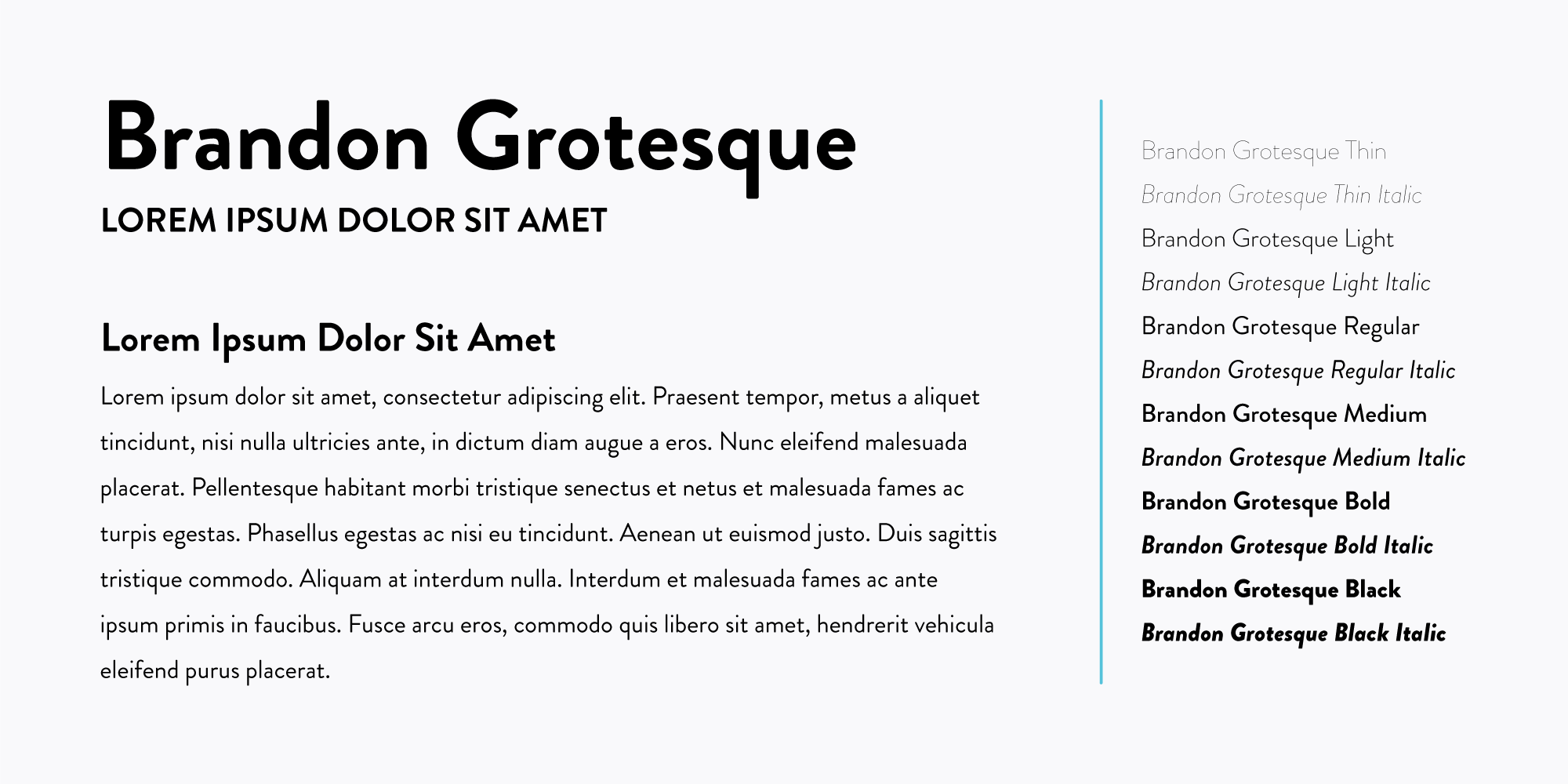
Brandon Grotesque

Inspired by the typefaces in magazines from the 1920s and 30s, Brandon Grotesque brings a unique elegance to the game of sans serif typefaces. 2011 winner of the TDC Award and one of my personal favorites, its geometric shapes keeps it legible while its slightly rounded corners add a certain friendliness. Due to its small x-height, Brandon Grotesque works best in display settings.

Brandon Grotesque was designed by Hannes von Döhren and released in 2010.

Find it here on Adobe Fonts

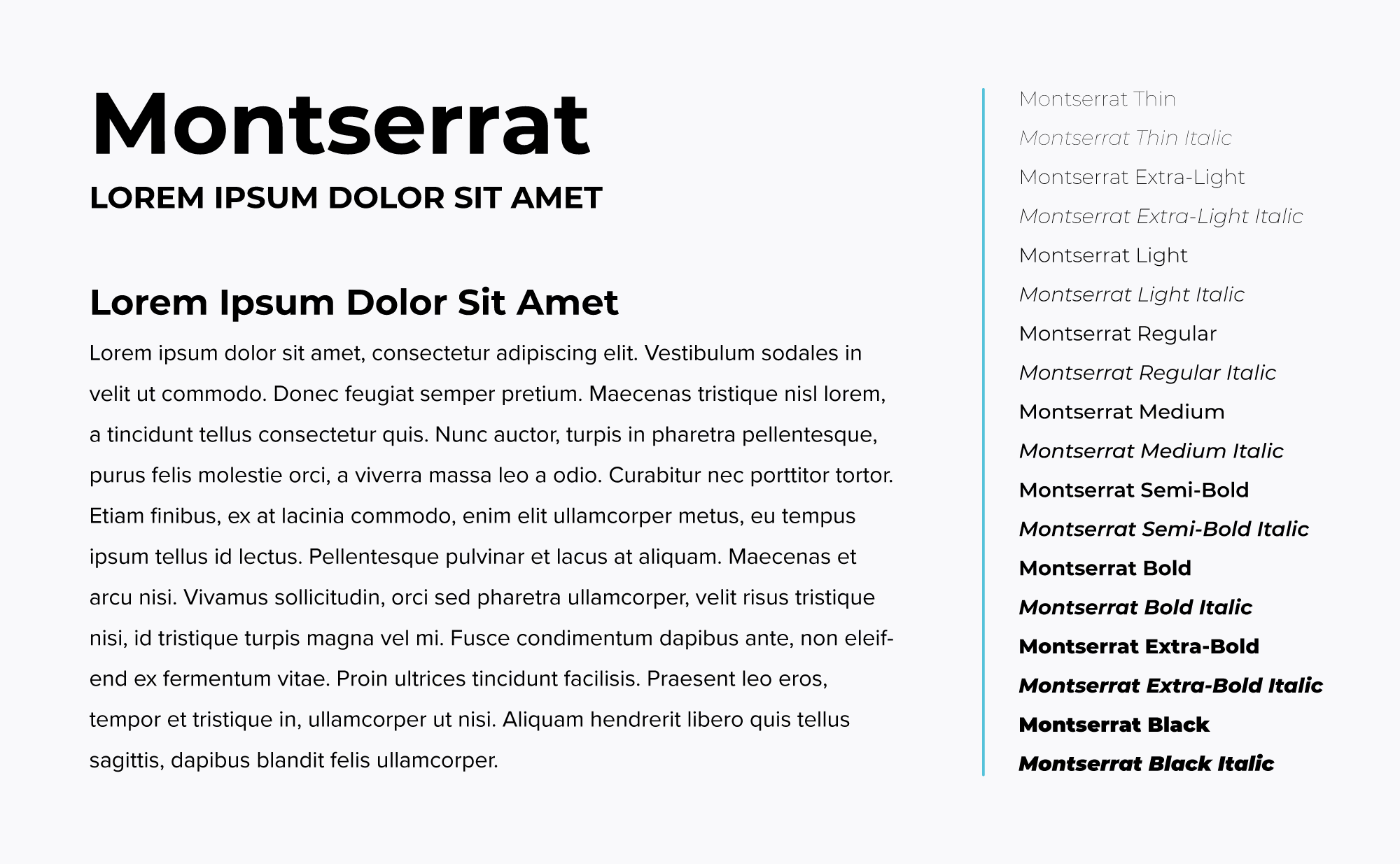
Montserrat

Inspired by the street signage in one of the oldest neighborhood in Buenos Aires, Monserrat is another wonderful choice if you’re searching for a typeface similar to Proxima Nova but that carries a more classy, sophisticated air. Its geometrically-based features make the text prominent and attention-drawing.

Montserrat was designed by Julieta Ulanovky and released in 2015.

Find it here on Google Fonts and here on Adobe Fonts

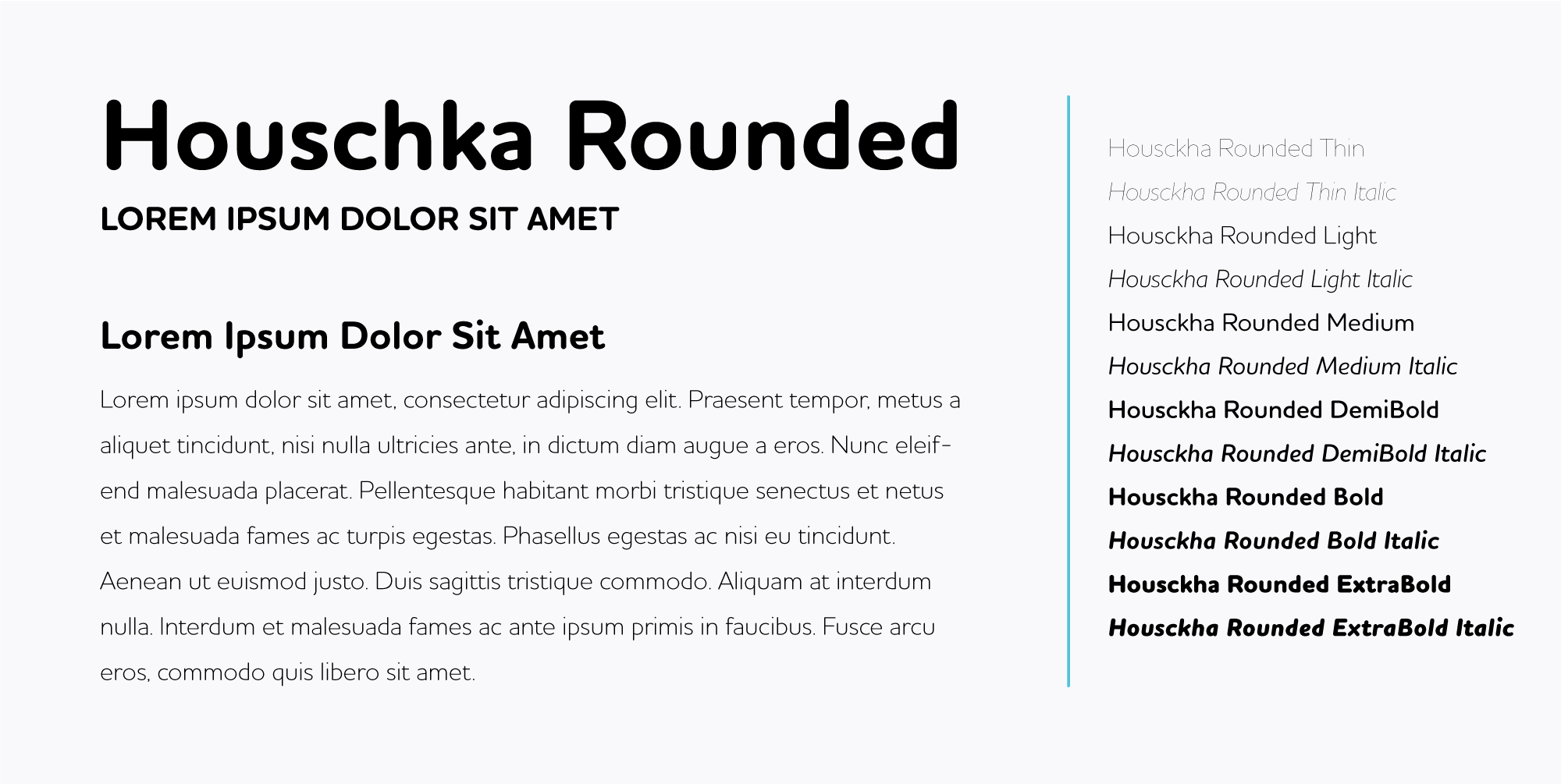
Houschka Rounded


Houschka Rounded is an excellent option for sites that are a little more fun and stylistic. It’s a great rounded typeface, coming across as soft and charming, while still maintaining high legibility.

Houschka Rounded was designed by Nick Cooke and released in 2010.

Find it here on Adobe Fonts

Serif


Playfair Display

Playfair Display is a beautiful high-contrast serif typeface that has a classic feeling to it, taking inspiration from the writing of the late 18th century. It is a display font, so it works best for headings and short stretches of text, but adds a lot of character and elegance to a page.

Claus Eggers Sørensen was the principle designer of Playfair Display. It was released in 2011.

Find it here on Google Fonts

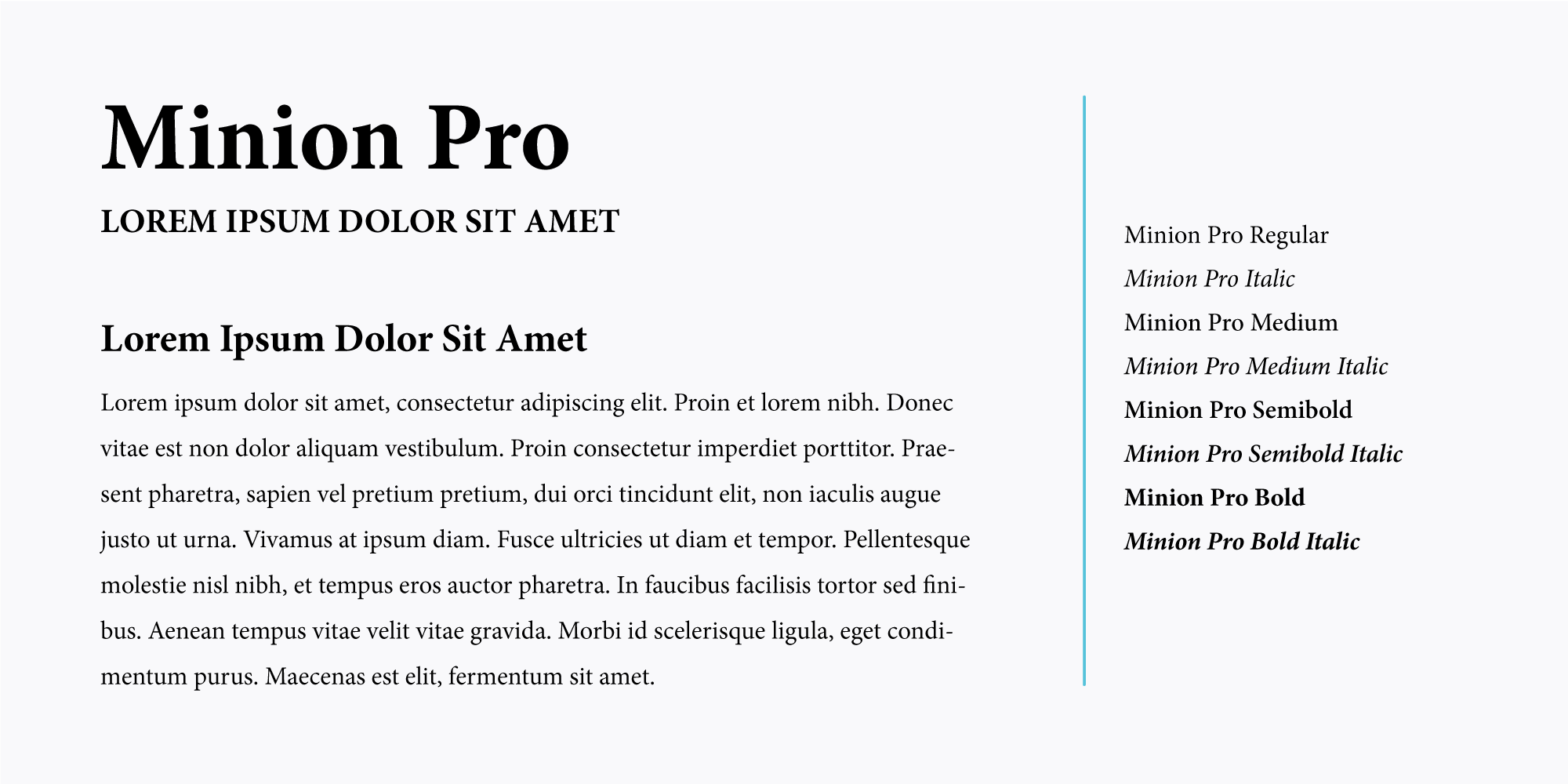
Minion Pro

Minion Pro is one of the most iconic and practical serif typefaces you can find. Designed for body text, it doesn’t call attention to itself, so if you need a font that isn’t going to distract your readers from your content, Minion Pro is the way to go. On top of this, it contains an enormous library of different font weights, characters, and glyphs.

Minion Pro was designed by Robert Slimbach, and was released in 1990.

Find it here on Adobe Fonts

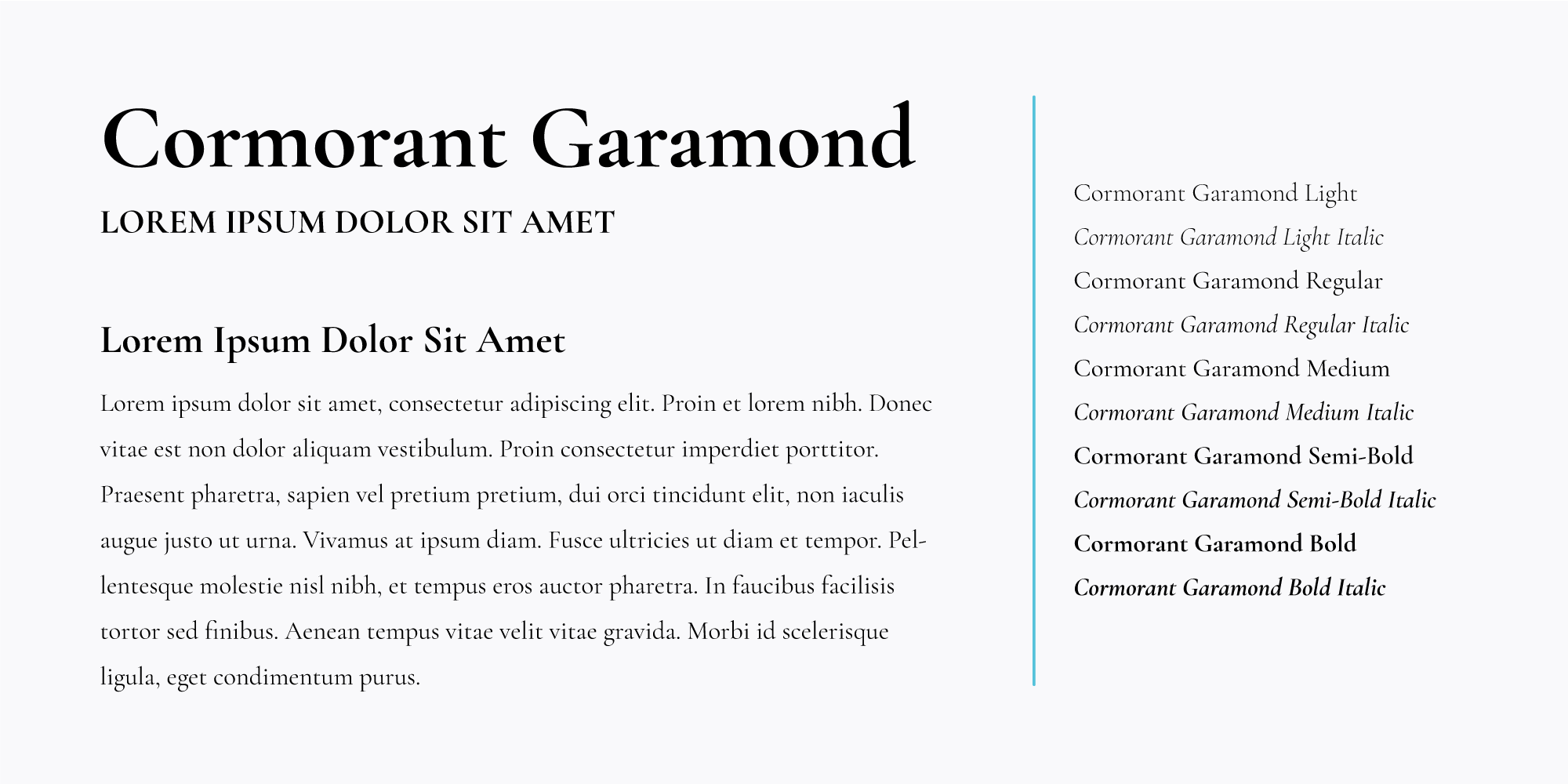
Cormorant Garamond

Cormorant Garamond is a display font that was inspired by the famous Garamond old-style typeface from the 16th century. It would be a great choice for a website that is classically styled and has a vintage flavor. This typeface is most effective when used for headings and short amounts of text, however, it remains legible at smaller sizes.

Cormorant Garamond was designed by Christian Thalmann.

Find it here on Google Fonts and here on Adobe Fonts

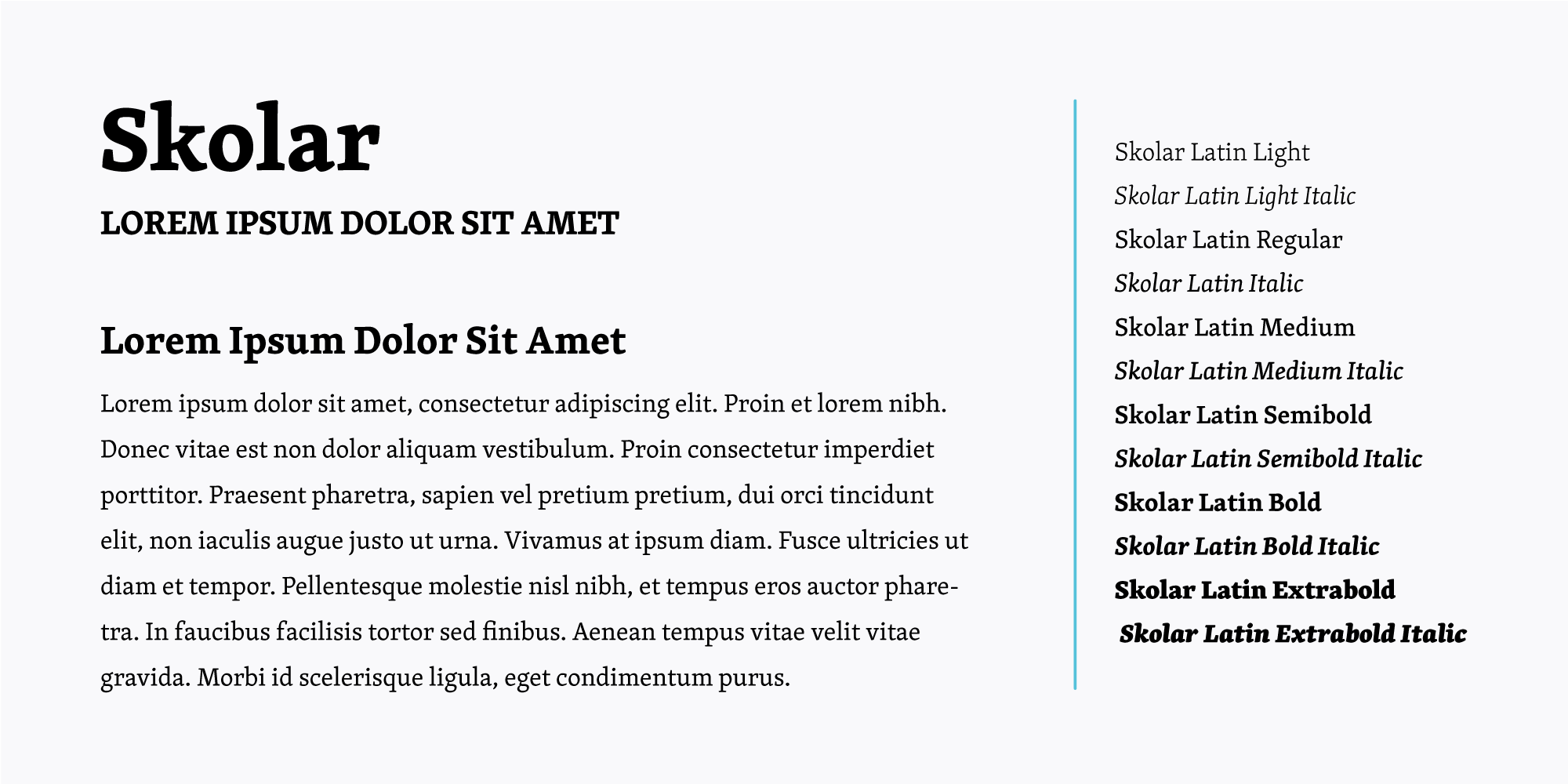
Skolar

Skolar adds a little more energy, life, and character to the world of serif typefaces. It remains easily readable due to its sturdy characters, while adding a bit of bold flair with its unique style. If you want a serif typeface that is legible but not boring, consider Skolar.

Skolar was designed by David Březina and Vaibhav Singh (Devanagari), initially published in 2008.

Find it here on Adobe Fonts

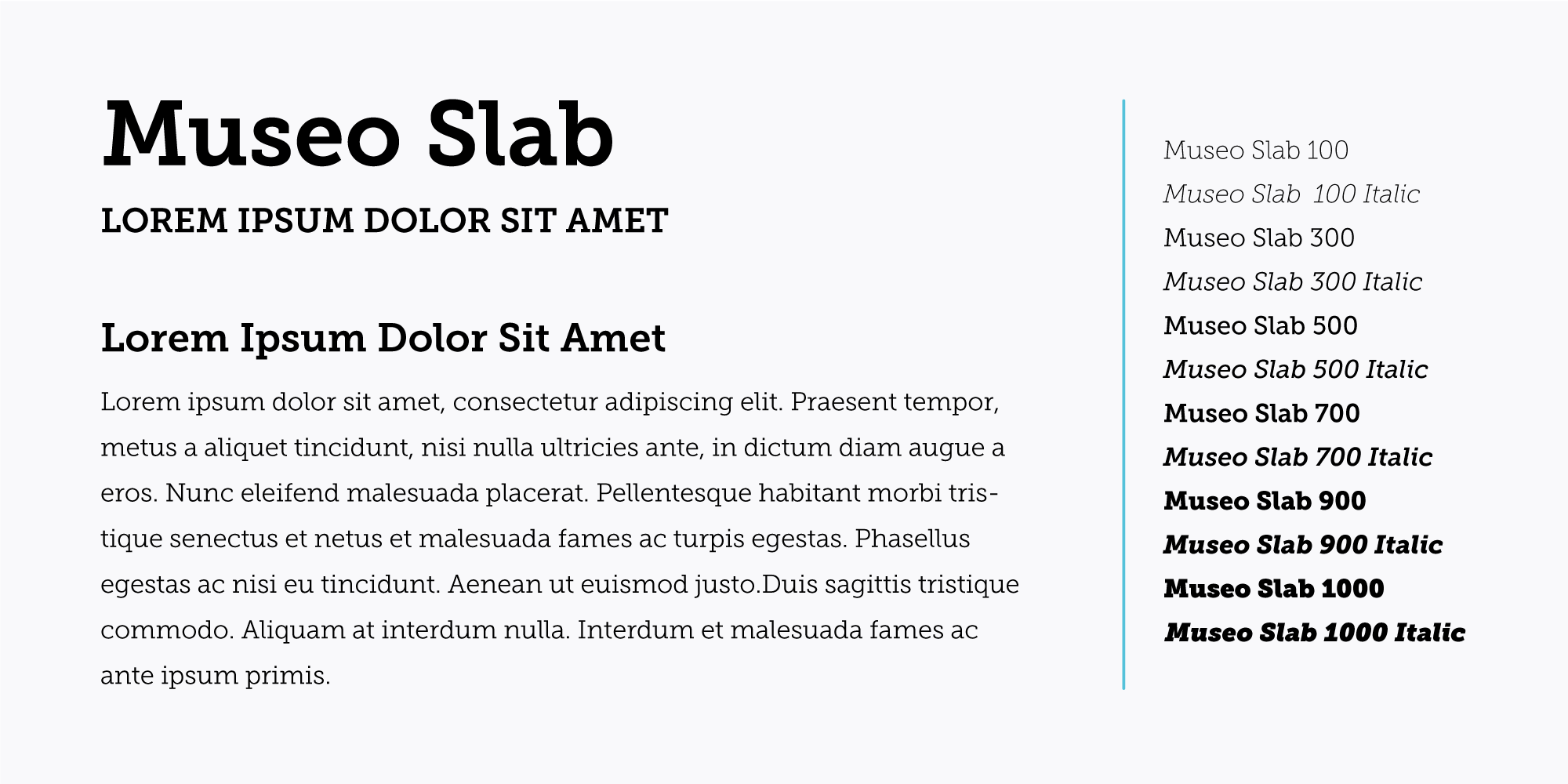
Museo Slab

If you’re in the market for a modern slab serif typeface, check out the contemporary Museo Slab. It’s a great option if you’re looking for a serif font that has a lot of unique character. Though it’s a slab serif, it is still incredibly readable at small sizes and is therefore not limited to being just a display font.

Museo Slab was designed by Jos Buivenga, released in 2009.

Find it here on Adobe Fonts

Contact our experts today to learn more about the best web fonts to use for your specific project.

Designing the Perfect PPC Landing Page

A well-designed landing page is the cornerstone of any pay per click advertising strategy. It doesn’t matter how optimized your PPC ads are; if their corresponding landing page isn’t designed to transform prospects into leads, then the entire campaign will fall flat.

While you’ve probably designed your entire website with conversions in mind, you should think of your landing pages as targeted specialists in lead generation and conversion optimization. The approach you take with landing page web design needs to be purposeful and capable of keeping the visitor focused on the reason they landed there in the first place.

Creating A High-Performance Landing Page for PPC Campaigns

Designing a high-performance landing page isn’t as difficult as it seems. The key is including certain elements of design that are proven to generate success for your pay per click strategy. Here are a few tips for seeing greater results from your landing pages, starting today.

Specificity and Intent

A common mistake that businesses make in their PPC management is using a one-size-fits-all landing page that handles all PPC traffic, regardless of the original ad that the visitor clicked on. If you’re running multiple ads at the same time, it’s essential to have a designated landing page for each.

The reason for this all centers around specificity and intent. Your PPC ads have probably been strategically developed to attract a wider portion of your audience. They’re coming to you through different platforms and displaying unique consumer behaviors. In other words, they’re not all going to want the same thing. Creating individual landing pages to match specific ads helps to keep each visitor interested and on track.

Make It Obvious and Easy

The last thing you want when someone arrives on your landing page is to have them be confused about the next step or how to get there. Landing pages need to be pointed and direct. The person who is visiting your landing page is there because they intentionally clicked on your ad. They’ve already expressed an interest, so there’s no reason to water down the content on your landing pages.

In fact, it’s the opposite approach that gets results. Keep your message simple, and feature easily recognized call-to-actions in prominent locations. You should also use this opportunity to eliminate any fear factors that a prospective buyer might have. For example, try offering a free trial period or a money back guarantee, and include a few testimonials to put their minds at ease.

Visual Appeal and Engagement Factors

Adding white space on your landing pages actually encourages consumer movement. Utilizing a clear design makes it easy for them to find what they’re looking for and form an opinion. Both visual and textual clutter is distracting and pulls the visitor away from the real purpose of your landing page.

Since space is limited and crowded landing pages don’t perform, it’s critical to look at ways of delivering your message without detracting from the goad. Using video accomplishes this beautifully. In general, video is becoming the content type of choice for many businesses and web designers because of its high-performance on landing pages and user engagement.

Web development that includes intuitively designed landing pages is key to your digital success. We’re the web design company that will help you achieve your goals. Contact Double Up Digital and let one of our web designers show you how we can elevate the performance of your PPC campaigns today.