Keyword Optimization Strategies to Supercharge SEO

You understand the importance of SEO for boosting online visibility in search results and funneling more traffic in your direction. Search engine optimization is essential for every business today, regardless of their size or the industry they’re in. Feel your way around SEO long enough, and you’ll soon discover that there are many layers to capturing the attention of search engines, and ultimately your target audience. While SEO comes with a constantly changing landscape, one thing has remained consistent throughout time – the importance of keyword optimization.

For many, keywords are synonymous with search engine optimization, or at least the first thing that comes to mind at the mention of SEO. This is because keywords play such a crucial role in how search engines find, rank, and present your website in relevant searches. With billions of websites on the internet, keywords are your main way of providing search engines with clues about your business, and the audience you want to attract.

Keyword Optimization Strategy

All that said, optimizing keyword usage isn’t as simple as plastering a few relevant words into your content. There’s actually a strategy behind keyword optimization, or at least there should be, if you want to maximize the return you’re getting from all your digital marketing efforts. Let’s look at a few of the most important steps to optimizing keywords for your website.

Keywords Research Business Concept. The meeting at the white office table

Step One: Identifying Your Goals

Were you thinking keyword research and content strategy were going to be first on the list? Knowing how to conduct keyword research, and what to look for in the word or phrases you choose, is important. But if you don’t first identify your goals, then you’ll have no idea what you’re looking for.

Take for instance a business that has been solely e-commerce since its start. After a couple of years, they’ve discovered a community they think is a great fit for a brick and mortar location. They decide to rev up their SEO efforts, and one of their biggest focuses is diving into content creation. In this case, the keyword strategy that they’ve had such success with for their e-commerce operation probably isn’t going to produce the same results for their physical location.

They have a new goal, so they need a new strategy, which in this case would include more geographically relevant, local keywords.

It’s also smart to take the customer journey into consideration when optimizing keywords for SEO. Not all the traffic that’s coming to your site is doing so with the same intent, and it’s an ineffective approach to think the same keywords are going to attract every member of your target audience. Develop separate keyword strategies that are designed to attract, nurture, and convert along the various stages of your sales funnel.

Keep Semantics in Mind

Let’s say nothing about your business, or your goals for search engine optimization has changed. Even with all other things remaining constant, SEO continues to shift. This means that even if your goals aren’t changing, you need to keep the shifting digital landscape in mind. One example of this is the rise in voice search.

Voice search is huge right now, and this demands consideration when developing your keyword strategy. The way we speak and type are entirely different, which means voice search users are coming at you with a completely new set of prime keywords.

It really all boils down to semantics. Considering semantics when optimizing your keyword strategy involves using more natural language phrasing and keeping search context in mind. For instance, keyword phrases that are presented in a Q&A format. Such as the difference between a text query that reads “Italian food near me”, and a voice search that asks, “where can I find the best Italian food in Atlanta”.

Evaluating SEO Keywords

Research that involves discovering the most popular, highest performance keywords for your niche is important. Something to keep in mind when doing this is that you’re not always going to be able to rank with the same keyword strategy that the giant corporation down the street has had success with. Your entire approach to SEO is different than theirs, so your keyword strategy should be also.

For smaller businesses, there are other elements of evaluating SEO keywords that should weigh more heavily. When looking at SEO keywords, keep popularity in mind, but also relevance, and intent.

The thing about going for the most popular keywords is that the more popular a word or phrase is, the harder it becomes to rank for it. If you’re a new business using the same keyword strategy as a well-established business that’s trusted in the community, you’re not competing on level ground. Chances are they’ll win the search engine race for the keywords every time. It might seem a little counterintuitive to choose less competitive keywords, but that’s the exact type of strategy that will help you stand out and rank higher in searches.

Another important sidestep to take when evaluating keywords is to consider user intent. There are three main intents that search engine users have when entering a query. The first is navigational and is used when they have a general idea of where they want to go but don’t know how to get there. They might enter the name of a business in the search bar or keywords that pertain to a specific type of business.

The next is informational. These are question-based queries, where the search engine user is looking for answers. This is where long-tail keywords and semantics are of extra importance. The third type of intent is transactional. These are the queries where the search engine user is looking to buy, sign up, etc. Choosing keywords that appeal to this intent is important because they’re essentially ready-made conversions that need little in terms of nurturing.
SEO cartoon graphic showing a magnifying glass over search results in Google.

Developing a Keyword Optimization Strategy for SEO

The information provided here is a good starting point for your keyword optimization journey. However, really digging in and getting the most out of your keyword strategy from an SEO perspective requires time, effort, and a lot of hard work. We’re the digital agency in Atlanta that’s ready to roll up our sleeves and handle keyword optimization so you can focus on managing your successful, growing business. Contact us at Double Up Digital to learn more about our approach to SEO keyword optimization today.

Why SEO Services Are Key to Propelling Your Business Forward

At this point, most businesses realize the importance of a basic SEO strategy. While search engine optimization remains a complex process on many levels, many businesses are starting to feel comfortable with some of the simpler elements of optimizing their websites and content to appeal to search engines, along with their ever-important target audiences. Of course, the internet is filled with how-to advice on SEO, which has created a whole generation of self-taught “experts” in the field. Continue reading to learn more about effective SEO campaigns and what SEO services are important to your business.

One of the most basic ideas of SEO is that when done strategically, it increases your online presence with increased website visibility by making it more searchable. You might not need to be a digital marketing expert to accomplish this basic goal, but the need for SEO goes so much deeper – and it’s something that’s best accomplished with an SEO professional by your side. Why are professional SEO services so important for today’s businesses? Here’s a closer look.

SEO Services Build a Connection with Your Target Audience

There’s one simple truth that makes SEO a must for businesses today, and it’s that organic search makes up the overwhelming majority of website traffic. Search engine optimization isn’t just about rising above the masses online, it’s also about positioning your brand so your target audience can easily find and engage with you on their terms – which just happens to be through search engines. The right marketing strategy paired with proper keyword research and technical SEO elements can drastically improve your search results in search engine rankings.

It can seem like SEO is all about metrics and analytics, and these numbers do play a starring role in determining if you’re on the right track with your current search engine optimization strategy. But at the end of the day, it’s the connections you’re after, and those can’t be made – at least in the numbers you’re looking for – without a dedicated search engine optimization strategy.

Trust and Credibility – the Dynamic Duo

Take a look around, and you’ll notice that consumers today have more choices than ever. When they’re looking to connect with a new business, they have the luxury of being choosy, and they’re more likely to give you a chance if they can find out a little bit about your business first.

This is where trust and credibility come into play. Google considers elements of your web presence that establish trust and credibility worthy of weighing rather heavily within in their search algorithm. They do this because they understand how important these factors are to their audience. At the end of the day, a search engine that places less than credible results in front of their users is less likely to see those users return.

So, you can see a connection here. Your target audience is looking for signs that you’re trustworthy and credible, and so is Google. SEO can help you establish this on both ends, but only if you do it correctly – which is why working with an SEO service is so important.

Trust and credibility can be established in a number of ways through SEO. For instance, creating in-depth, authoritative content on topics that are important to your target audience but haven’t been covered by others in your industry, developing a backlink building strategy that encourages links from other reputable sites, focusing on review generation, and local SEO to make it easier for local traffic to find you, just to name a few.

It’s All About User Experience

The beauty of search engine optimization is that it’s next to impossible to succeed at it and not create the ultimate in user experience for your audience. User experience (UX) is a term used to describe the overall level of usability and satisfaction your visitors find when they land on your website. It’s about providing a positive experience, free of the many common glitches that occur on sites without a dedicated approach to SEO.

Let’s take one of the most basic elements of SEO – speed. Did you know that when someone lands on your website, especially if it’s from a mobile device, that you only have a mere couple seconds for your site to load before the risk of them bouncing away begins to increase exponentially? Once you hit the three-second mark, you start waving goodbye to potential customers in droves. A big part of SEO is meeting your audience’s experience expectations.

There are elements of SEO services that you might not even be aware of. For instance, your site’s architecture and ease of usability, simplicity in web design, mobile responsiveness, quality internal and external links, and the list goes on.

Do You Really Need to Work With SEO Services to See Results?

Well, no. You can certainly take a hands-on approach to SEO and invest your time and resources into generating results for your business. The one thing that many businesses fail to consider is that time is money, and you’re not necessarily saving money or boosting your bottom line by tackling SEO yourself. In fact, it’s an arguable point that you’re diminishing profitability.

SEO services are complex, as are all elements of digital marketing. There are more layers to search engine optimization than you’ll ever be able to learn from a blog or a 1-hour crash course online. Plus, there’s a lot to be said for experience and in-depth knowledge of an ever-changing industry – something that an SEO agency can bring to the table.

The bottom line is that SEO services are essential for businesses today, regardless of how much of their customer and audience interactions happen online. SEO helps build your visibility in an increasingly crowded digital world, and it helps to form the valuable connections with your audience that can eventually be nurtured into conversions. All of this is far too valuable to trust in the hands of a novice when an experienced digital agency can work with you to ensure your success.

Experts in SEO Services & Digital Marketing

Taking the leap to trust an SEO company with the task of building a brand and reputation online is one that is often done with caution, and rightfully so. We understand how crucial the business, and we’d like the opportunity to show you how we can change your growth trajectory for the better with SEO. Contact Double Up Digital and speak with one of our SEO specialists to see how we can improve your current strategy.

What Insights Should You Expect From an SEO Website Audit?

The internet is an incredibly busy place. Google alone processes upwards of 3.5 billion searches each day. When each one of those queries is typed into the search bar, the person on the other side of the screen is expecting Google to provide the results that answer their questions or point them in the direction they want to be going. Now factor in all the activity on other search engines, and the number of people looking to engage with businesses on the internet daily skyrockets. An SEO audit can help you interpret this data as it is relevant to your business.

Appearing in search results isn’t a matter of luck or chance. Each one of the websites that appear on page one of search results accomplished their rank by committing to an SEO strategy that landed them there. Every business with a website needs to understand the importance of search engine optimization, and most do. The problem is that understanding it and implementing it successfully are two entirely different concepts.

One way that you can make the leap from understanding to successful implementation is by having a professional SEO analysis of your website. An SEO analysis is a tool that identifies ways to help optimize your website performance from an SEO perspective.

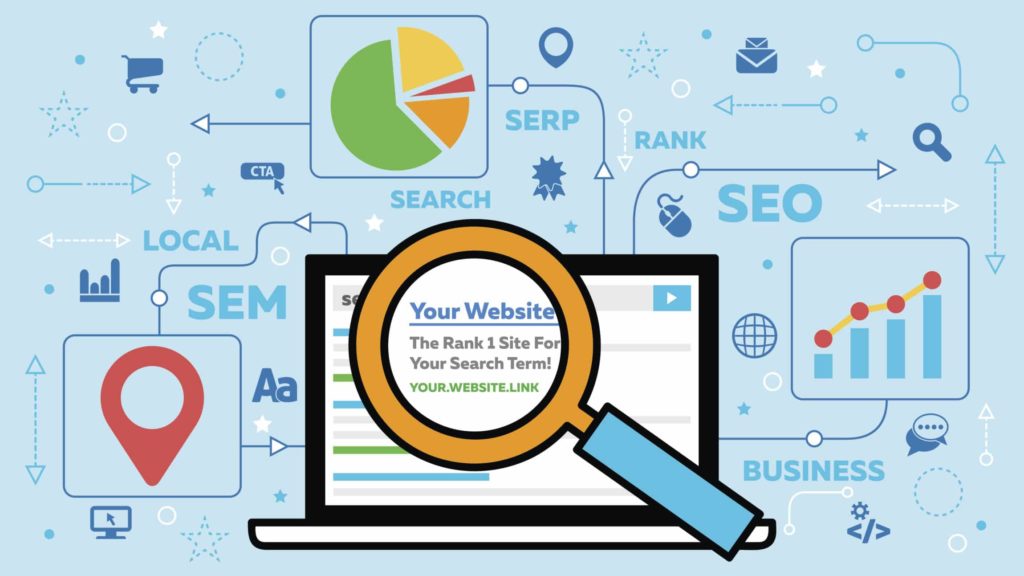
SEO cartoon graphic

What Is An SEO Audit?

Let’s say you’re reasonably pleased with the performance of your SEO strategy, or maybe your business is growing without devoting much in terms of resources to search engine optimization. If everything is going great as is, why rock the boat and look for problems?

The simplest answer is that you don’t know what tomorrow brings for your business. Maybe a new competitor enters the market that knows how to sweep your shared target audience off their feet online. Maybe your business is gradually changing, and the SEO strategy you’re using today isn’t going to work tomorrow. Then there’s the fact that SEO is constantly in a state of flux, and even the most effective strategy needs to be assessed regularly and adapted to generate even better results.

An SEO audit involves a digital marketing professional coming in and looking at every single element of your SEO strategy. This includes the architecture of your site, all the content on your website – along with the content you share on other platforms and offsite SEO factors. Search engine optimization has an incredibly far reach and measuring the effectiveness of each layer is something most businesses don’t have the bandwidth to handle on their own.

After auditing all the various components that matter for search engine optimization, an audit provides you with an SEO score, which is essentially a measure of how competitive you are online in comparison to your competitors. This score can then be used to create an SEO blueprint that positions you to achieve greater success online. An SEO audit identifies your strong points and weak spots, which enables you to develop a strategy that helps you rank higher among search engines.

What’s the Goal of an SEO Audit?

At first glance, this question seems almost too easy to answer. The goal of SEO is to boost organic search engine results, right? An SEO analysis is a tool that will help you accomplish this. Fair enough, but sometimes it helps to break that larger goal apart into smaller pieces that you can really focus in on. The reality is that while SEO can improve your search ranking, that alone isn’t enough to spark growth for your business. It’s these separate elements of an SEO strategy that really count for building connections and conversions.

An SEO audit should cover a lot of territories, but these are a few of the primary objectives:

●  Assess your current search engine ranking. This is the basis of SEO, without a prominent rank in search results, the other objectives are difficult, if not impossible, to obtain.

●  Build organic traffic. Once you’ve achieved visibility in search results, the next objective is how to get more people to click. An SEO analysis measures your traffic and works towards solutions to increase it.

●  Lead generation. What are you doing with that traffic once it lands on your site? How can you increase the lead potential of the visitors to your site, and how can you more effectively entice traffic with a lead generation strategy.

●  Conversion potential. How can SEO help you nurture those leads to conversion, and eventually help build revenue for your business?

These are the core objectives of search engine optimization, and an analysis is key for ensuring that your current strategy is helping your business reach each of these objectives – or assisting you in developing a strategy that enables you to meet your goals.

Content marketing strategy cartoon.

What You’ll Learn From an SEO Audit

Of course, you’ll want to make sure you’re gaining valuable insights from your SEO analysis. Having a professional come in and analyzing your website for search engine optimization from top to bottom is an investment of resources, and you want to make sure the insights gained will actually be of value to you moving forward.

When you contact a digital agency in Atlanta for a complete SEO audit of your website, here are the basics of what you should learn.

SEO Competitiveness

One of the first elements that a digital agency should look at is how competitive your website is online, especially in comparison to your competitors. This involves identifying your top competitors, where they rank in search results, and what keywords strategy is or isn’t working for them. The point isn’t necessarily to copy what they’re doing, but rather to gain better insights into what motivates – or fails to motivate – your shared target audience. Competitor analysis also provides a baseline of search engine performance to work from.

Important details that your digital agency will analyze when looking at your competitors include:

●  Whether their website is optimized for mobile consumers

●  If they’re stuck on HTTP, or if they’ve moved on to providing visitors with extra security with HTTPS

●  The age of their domain – older domains typically rank higher

●  How many web pages are indexed

●  Are they leveraging call to actions throughout their site

●  The general service area

●  Have they included a site map

●  Is their website linked to social media, and if yes, how effective is their social media strategy

Keyword Research and Performance

You need to know your target keywords. Why? Because all the effort you put into SEO is essentially in vain without them. Yes, you can do some keyword research on your own. However, a professional digital agency that specializes in search engine optimization has access to more tools, and the time and resources to use them to your full advantage.

In addition to identifying the keywords you should be ranking for, an audit will also look at the current rank of your primary and secondary keywords, along with how difficult those keywords are to rank for, how many monthly searches those words or phrases are a part of, and the organic click-through rate they produce. Understanding search volume related to your industry is critical and we have the SEO audit tools to improve your keyword performance.

Backlink Assessment

Backlinks are arguably one of the most important components of a successful SEO strategy. They’re also something that many businesses struggle with building and managing on their own. Generating backlinks is hard enough on its own – managing the backlinks you do have is another beast altogether.

An SEO audit will help you identify spammy, or low quality, links that are detrimental to your search engine performance. Search engines look at the quality of your backlinks, along with the relevancy and authority of the sites they come from when determining your own credibility as a website they want to promote.

Content Audit

Quality content is crucially important for SEO. Not only is content your main mechanism for tapping into keywords and helping search engines understand what you’re all about, but it’s also your primary vehicle for connecting with your target audience and providing them with an exceptionally valuable experience.

When an audit of your content is conducted, the SEO professional is looking for glitches that could be hampering your search engine performance. For instance, duplicate content – whether you’ve duplicated your own content or have created something that’s a little too close to something else out there – has a negative impact on SEO. In addition to identifying content this is negatively affecting your SEO, we’ll help identify which types of content you should be building on.

User Experience Insights

This is a rather broad category, but every element of user experience (UX) is important to your search engine performance, so it’s important that the agency conducting your audit carefully looks at all the UX factors and helps you understand where you can improve and why it’s important.

A few key UX factors that the agency handling your analysis should provide insights on include load speed, mobile responsiveness, average page visit length, which can help identify where you’re losing visitors, and information about your website’s architecture that either enhances or detracts from quality UX.

Turn to the Trusted SEO Agency In Atlanta

When was the last time you had a complete, professional SEO analysis completed on your website? If your answer is that it’s been a while, or maybe even never, now is the time to get in touch with the digital agency in Atlanta that’s ready to roll up their sleeves and get to work building a successful SEO strategy for your business. Reach out to Double Up Digital and schedule an SEO analysis today.

Black Hat SEO Strategies That Can Tank Your Google Rankings

There’s a pretty fierce competition brewing in the digital space, and it’s between businesses that are each fighting their hardest to earn a top spot in Google’s search results. The majority of consumers today turn to the internet at least once when they have a question, want, or need that a business might be able to help them with. If they can’t find you online, then there’s a really good chance they’re going to connect with the competitor that managed to make it onto page one of Google’s search results. In order to gain better rankings, many have turned to black hat SEO methods. Below we’ll explain why you shouldn’t do that.

Just like any other competition, there are bound to be some bad apples in the mix. For all the businesses out there trying to earn a priority rank through legitimate, SEO friendly strategies, there are those that are trying to work their way around the system. Some do it on purpose, while others aren’t entirely malicious in their actions. These tactics are called black hat strategies, and no matter how or why you use them, they can damage your SEO, and your reputation.

What Is Black Hat SEO?

SEO strategies can be placed into two distinct categories – white hat and black hat. White hat SEO is all the positive things you can do to build a stronger, more visible web presence by appealing to Google’s search algorithm. Black hat methods are the tactics some employ in an attempt to “cheat the system” and boost their search engine rank with minimal effort. While black hat strategies can sometimes provide an immediate, quick boost – they almost always come with the risk of SEO penalties.

In short, black hat SEO goes against all the guidelines provided by Google and takes an alternate approach in hopes of manipulating the algorithm to achieve a higher search engine ranking. One might think that relatively little harm in a black hat tactic here or there. However, search engines have become sophisticated to the point they can pick up on very subtle cues that maybe your efforts are lacking some integrity.

It’s often the case that black hat SEO occurs on accident. This might be the case when someone who’s relatively unfamiliar with SEO attempts their own hand at building up their business online. In some cases, there’s a fine line that separates white hat from black hat SEO, and it can be easy to unknowingly cross over into dangerous territory. The downfall of black hat strategies is that you can end up causing serious, permanent damage to your SEO – something that can be near impossible to recover from.

Fortunately, Google will usually provide a warning that they’ve noticed some suspicious SEO activity and notify you that you’re on the verge of being “de-indexed”, which is essentially saying that you no longer exist in the eyes of the search engine. If you receive such a notification, one of the following black hat SEO methods might be behind it.

Black Hat Strategies That Are Hurting Your SEO

It’s possible to go on at length about all the black hat SEO methods. However, most of them are rarely an issue or employed by those with only the most malicious intent. For everyone else who might find themselves under Google’s scrutiny, there’s really only a few that are usually the culprit.

Keyword Stuffing

If using a keyword a couple of times is good, using it a dozen times must be better, right? Not necessarily. Search engines crawl your content and pick up on specific keywords, and while the strategy of overusing them may have worked a few years ago, it’s far from an effective strategy now. Search engines want to prioritize sites that provide value to their audience. Robotic sounding, keyword-stuffed content isn’t going to accomplish this, no matter how relevant the keywords are.

Some sites try to “hide” keywords, like using colored font to blend them into the background, in hopes of providing a better user experience, while still giving search engines something to grab onto. This is an underhanded tactic that’s likely to end with a penalization. Stick to a 1-3% keyword saturation for the best results.

Duplicate or Spun Content

In the world of digital marketing, there’s a major focus on content to engage audiences and build relationships. Search engines love it when you provide rich, meaty, and relevant content to your audience. What they don’t like is when you’ve taken advantage of someone else’s hard efforts and published duplicate or spun content on your site.

Trust that it’s pretty easy for search engines to pick up on duplicate content, or even content that has been spun just enough to disqualify it as plagiarism. Both your audience and search engines are going to look more favorably on you if you publish content that’s unique and offers real value.

Link Buying

Backlinks are essential to SEO. With each backlink you earn, your web of visibility grows exponentially. Following this logic, the more backlinks the better, but this isn’t always the case. Search engines look at the source of your backlinks and weigh your own credibility based on what they find. Are you being linked to from a low quality, spammy site? Have you suddenly acquired hundreds of backlinks overnight, indicating that you paid for them rather than earning them organically? Underhanded backlink strategies can cost you big time.

Clickbait

With all the digital noise out there, it’s hard to find a way to stand out and get noticed online. You want to get traffic moving in your direction, so you depend on engaging headlines and powerful images to get clicks. This in itself is not a black hat strategy. However, if those headlines or images are sensationalist, and designed to mislead your audience, you can bet your ranking will take a hit. Use powerful headlines and images that are aligned to your content to generate a surge in traffic.

Questions About Black Hat SEO or How to do it Right? Turn to a Trusted Expert

SEO is complex, and mistakes can be easily made. There’s no reason to let an honest mistake tarnish your reputation when there’s a team of digital experts at your disposal to help. At Double Up Digital, we’re dedicated to developing a strategy based on white hat SEO tactics that deliver results. Contact Double Up Digital and learn more about our approach to SEO today.

How to Make Sure Your SEO Agency is Doing Their Job

Search engine optimization is a focus of business development that is deserving of all the attention it receives. You’re already well aware of how central SEO is to your ability to reach a wider audience, influence conversions, and grow your bottom line. The fact that SEO is essential has already been established, now the challenge is how to best approach the development of an SEO strategy that fuels growth for your business. So how can you tell if your SEO agency is actually performing? We’ll answer that below.

There’s always the option to handle SEO (along with all the other components of digital marketing) inhouse but that can also become a drain on the resources needed to continually push your business forward. There’s also the nagging concern that the person you hire might not be as well equipped for the responsibility as an SEO agency whose only goal is to produce the results you’re looking for.

This is why so many businesses like yours turn to a digital agency to handle the heavy lifting and intricacies of true search engine optimization. The reasons to hire a professional are many, especially with all the minor – and major – fluctuations in Google’s algorithm. You need someone who is on top of the industry and well ahead of any curveballs that Google throws their way.

The challenge is that once you do bring an agency on board, how do you determine if they’re doing their job, maximizing results, and having a positive influence on your bottom line? In other words, how can you tell if your SEO specialists are doing their job, and worth the money you’re paying them?

What An SEO Agency Should Be Doing For You

It’s easy to talk a big game with SEO, but much more difficult to deliver measurable results. It’s an unfortunate fact of the industry, but one that needs to be recognized so you can avoid wasting time, money, and opportunities on digital “experts” who are more talk than action. Before you make initial contact with an SEO specialist, it’s crucial to have a foundational understanding of what they should be doing for your business.

There are a few easy-to-spot-benefits of working with an SEO agency. Like how they have access to all the tools and technology that you might not have at your immediate disposal. If they take their responsibilities in the industry seriously, they should also understand the role your competitors play in your SEO success and have a strategy for using those insights to boost results. And finally, hiring an agency should turn out to be time and cost-effective because they immediately recognize which tactics to use, and which to leave off to the side.

SEO agency team inspecting website traffic.

An SEO specialist should take a very thorough approach to strategy development. It’s important to recognize that SEO has many facets, and it isn’t a one-size-fits-all solution. A few of the major focuses of an SEO specialist include:

  • Discovery of your business, including familiarizing themselves with every detail that matters for SEO
  • Competitive analysis that looks at what your main competitors are doing, along with recognizing their strong and weak points
  • Buyer personas that help you pinpoint who you’re targeting and how to reach them
  • Keyword research that helps you reach your targets
  • On-page optimization that leaves no stone unturned for improving the SEO structure of your website
  • User experience audits to ensure website visitors linger and return.
  • Content generation and management to engage your audience
  • Link building to expand reach and visibility
  • Analytics that help shape the most successful strategy for your business

5 Ways to Measure the Success of Your SEO Agency

digital marketing, technology and advertising concept. Chart with keywords and icons on white background

So, you know what your SEO specialist should be doing, but how do you know they’re actually doing it and producing results along the way? Here are a few easy ways to tell if your SEO agency is doing their job.

Communication

It’s impossible to produce results with search engine optimization without a good exchange of communication. Are they asking questions about your business, where your challenges have been, and what your goals are? Can they make immediate suggestions and then follow up with more in-depth solutions? Are they coming to you to discuss the next move in your strategy?

Results

Obviously, you’re looking for results and you can’t expect miracles overnight. However, your SEO agency should be taking the initiative to report back to you on results, whether they’re positive or indicate a need for a change in direction. A true specialist should keep you in the loop regarding results at every turn.

Suggestions and Answers

A quality agency should be able to provide some immediate insights, even if it turns out that another approach works best for your business. By looking at some surface components of SEO and making valuable suggestions, they’re indicating a real interest in your business. Likewise, your specialist should be able to answer your questions and explain their process to you without hesitation.

Key Metrics

An SEO strategy can take a while to build up momentum, but there shouldn’t be too much time that passes before you start to see small movements in some key metrics – or at least some calm waters where you were previously noticing steady drops. Take a few minutes and look at metrics like your search engine ranking, the volume of traffic, time on your site, etc. If you’re not seeing positive movement, it’s time to ask why.

Money Talks

At the end of the day, you’re looking for an increase in revenue. An exception to advice about key metrics mentioned above is if you start to see a drop in traffic that’s associated with a boost in revenue. This means your SEO specialist has done the job of reaching a targeted audience primed for conversion. This is a good thing. If a month or two passes with no measurable profit benefits, don’t hesitate to ask your SEO specialist why.

A Dedicated, Thorough Approach to SEO

Trust is key when working with an SEO agency. After all, their approach to SEO can either give your business the forward push it needs or leave you stagnant while your competitors march ahead. The last thing you want to do is trust the future of your business in the hands of anyone less than a knowledgeable, experienced SEO agency. At Double Up Digital, we have the experience you’re looking for and welcome the opportunity to discuss strategy with you. Contact Double Up Digital today to request on an audit of your current campaign. We’ll be happy to identify areas where we think you can improve and how we can help.

Why Local SEO Is a Must for Your Small Business

As a local business, do you know how to optimize your web presence to attract a larger segment of your local audience? Today, as many as 4 out of 5 consumers are turning to search engines to find and connect with local businesses. If you want to get in front of your audience, local SEO is a must-have strategy for your marketing toolbox.

Location icon symbolizing local search.

What Is Local SEO?

Let’s start with the basics. Most businesses online have some sort of search engine optimization strategy in place – or at least they should. The premise of SEO is to do everything you can to appease search engine algorithms and appear as high in search engine results as possible. This is accomplished through a variety of tactics.

Where many small businesses are missing an incredible opportunity is with local SEO. Local audiences want search engine results that are geographically relevant. If they’re looking for a place to meet friends for happy hour or where they can take a weekend yoga class, results that aren’t in their geographic target are going to be meaningless to them.

Local SEO is a strategy that helps your business get noticed by search engines in response to local search queries. It’s the strategy that bridges the gap between your business and your local, real-world audience. Think along the lines of local business directories, maps, locally relevant content and a keyword strategy that is aligned to your local community, for starters.

Why Local SEO Matters

We all know that there’s more competition than ever online. No matter how specialized your business is, you can trust that there are thousands (if not more) just like you. Fortunately, you’re not competing with all of them, but you are competing with businesses that you share your little corner of the world with.

This means that businesses like yours are under more pressure to attract local customers online. Without a strategic approach to SEO in place, you’ll have plenty of time to sit around and watch all your potential customers file through your competitor’s door.

Local SEO is also important because it’s designed to connect you with your mobile audience. People who use their mobile devices to search and connect with a local business will often visit that location within a day. If you haven’t made it easy for local mobile consumers to reach you, you’re missing out on huge revenue potential.

First Steps for Getting Started with Local SEO

There are lots of great strategies you can employ for boosting local SEO, including taking advantage of your Google My Business Listing and Google Maps, developing a local keyword and content strategy, mobile optimization, building local backlinks, reputation management, and more.

If this sounds like a huge undertaking, don’t worry – we’ve got you covered. At Double Up Digital we’re experts at driving traffic for businesses just like yours through a range of digital marketing strategies, including local SEO. With visibility and traffic within your reach, what are you waiting for? Contact Double Up Digital today and learn more about local SEO for your business.

3 Tips for Writing Copy that is Emotionally Compelling

Pay per click ads are effective tools for generating a stream of highly qualified traffic to your website. The only catch is that for pay per click advertising to be effective, the copy within your ads needs to be compelling enough to reach out to your audience and immediately grab their attention.

This is no small task, especially in an environment where so many other businesses are competing against each other to achieve the same goals. As a business, you need to think about what really compels a consumer to take action. What makes the difference between a PPC ad that gets skimmed over and one that generates clicks and incites action?

Tips for Writing Copy That Connects With Users Emotionally

The answer is emotion. We’re emotionally driven creatures and when a business learns how to tap into certain emotions and appeal to their audience on a personal level they start to see a positive shift in results. Here are 3 tips for writing PPC ad copy that’s psychologically compelling and effective for fueling action in your paid ad campaign.

Writing Copy That Conveys Scarcity and a Sense of Urgency

Today, consumers have become more conservative with their purchasing power. When they spot your PPC ad they may feel hesitation at even the idea of clicking on a link that might try to encourage them to spend money. Tapping into the emotions of scarcity and a sense of urgency is one way to overcome this hurdle.

Urgency and scarcity are motivators in the customer journey and audiences tend to respond strongly to a “now or never” message. Consider using wording that indicates a limited time offer or implies that your message is directed at this exact moment in time. Words like “now”, “today” or “limited time” let the customer know the offer might not exist tomorrow.

Easing Their Fears

When writing copy, your PPC ads should expose you to an audience that might not have previous experience with your business. These customers are going to be naturally hesitant to invest their money, or even their time, in a business they don’t have personal experience with.

You can alleviate their fear of the unknown by using your PPC copy to provide them with reassurance. Include wording that instills trust – for example, you might include a 100% satisfaction guarantee or highlight your zero hassle return policy. It also never hurts to include a link to your Google or social media reviews to help potential customers feel more at ease.

Value They Can’t Resist

Contrary to what you might think, the most effective PPC ads aren’t focused solely on the service or product they’re promoting. A subtle shift in your PPC ad copy that puts the focus on the problem you’re solving helps to communicate the real value of your message to the audience. For instance, a roofing company will see more results from ad copy that focuses on fixing a leaky roof than copy that only makes mention of their roofing services.

PPC Management That Produces Results

Successful PPC campaigns are fueled by powerful, emotionally compelling ad copy. You want to get the most out of your PPC investment and we want to help. At Double Up Digital, we know how to optimize PPC results for businesses just like yours. Connect with Double Up Digital and elevate your digital presence today.

How to Create Content That’s Optimized for Voice Search

Voice assistants are everywhere, and a growing number of us are taking advantage of the convenience they provide. Think of how much easier it is to ask Alexa a question than to stop what you’re doing and type it into a search bar. Continue reading to learn how to create content that is optimized for voice search.

The rise of voice has been influential in changing how we engage with the internet. It has also created a few new challenges – like breaking away from the old standards of search engine optimization and adopting an approach that is equally effective for voice search queries.

Optimizing Content for Voice Search

Don’t despair. Optimizing content for voice search isn’t that complicated. A few simple modifications are all you need to attract more traffic from all types of search queries. Here are a few easy, effective ways of creating SEO content that’s voice search friendly.

Identify Long Tail Keywords

The main difference between voice and text search queries is the language that’s used. Think about how someone might search for a pizza restaurant. If an inquiry is text-based, it might be something like “pizza near me.” Texting requires focus, so search engine users are more likely to keep it short and sweet.

Voice search is different because search engine users are more included to speak in complete sentences. A voice search might sound something like “What is the nearest pizza restaurant that serves beer?” This means that you need to rethink your keyword strategy and include long tail keywords that occur more frequently in voice searches.

Create Content Based Around Voice Search Intent

Intent has become a major focus of search engine marketing in general but it’s especially important for content that captures the attention of voice users. Voice search offers internet users the opportunity to better communicate what they’re looking for. As a result, the search engines are better able to pick up on the underlying intent of the search.

Instead of creating content that is built solely around a keyword strategy, think about the question, problem or need that is fueling your audience’s search queries and create content that offers solutions.

Write Short, But Go Long

Considering that so many voice searches are initiated on mobile devices, it’s important to structure your content to appeal to the mobile consumer. Structuring content in short, digestible paragraphs that can be easily pulled out and displayed on mobile screens is important.

Secondly, just because the voice user wants to consume content in short snippets doesn’t mean that they’re willing to compromise on value. Long form content that delivers information, insights, and answers that your audience can really sink their teeth into is going to get more traction with voice searches than short, keyword stuffed pieces that fail to deliver any real value.

Act Natural and Be Yourself

Finally, don’t get so caught up in SEO that you lose your natural voice. Today, your audience demands authenticity, no matter how they’re reaching you. If you want to know how to let your personality shine with content that’s optimized for voice search, we’re here to help. Contact Double Up Digital to learn more about our SEO services and how we can increase your visibility in voice searches today.

Is Negative SEO Really a Threat to Your Business?

You’ve invested a lot of resources into search engine optimization in an attempt to create a solid digital presence and reputation. You’ve done everything you should, so you should be able to sit back and reap the rewards of a job well done. Aside from paying attention to performance metrics and doing the occasional SEO checkup, you should have nothing to worry about. However, negative SEO factors may be inhibiting your success.

Except there are people out there, who might not be so keen on your success. Much like in every other aspect of life, bullies and unscrupulous individuals have made the internet their playground, and they’re looking to throw a wrench in all that success you’re enjoying.

It’s called negative SEO and it is a legit fear of many businesses online. But is it really a threat, and what do you need to know to protect yourself?

What Is Negative SEO?

Negative SEO happens when someone intentionally tries to sabotage your reputation and the effectiveness of your search engine marketing. This might include someone hacking into your website, creating low quality, spammy links to your site, changing information on your Google My Business Page or other directories, creating fake social profiles in your name, and copying the quality content you worked so hard on – just to name a few.

Any business with an online presence can be a target. Sometimes, it’s a competitor who tries to sabotage your reputation by paying someone to create a slew of bad reviews, but it can also come from someone who is just bored and is looking to stir up a little trouble.

It’s enough to leave even the most reputable, solid business nervous. The question is what are the chances that it will happen and how much of an impact do these malicious attacks have on SEO?

Is Negative SEO a Threat?

When it comes to all things SEO, we tend to look to Google to provide us with answers. The problem is that on this topic, it’s nearly impossible to get a straight answer out of the search engine giant.

Google tends to take the position that you shouldn’t invest too much energy into worrying about negative SEO and instead focus on building a positive presence through search engine marketing. Ask any business that’s been affected by negative SEO, and you’ll get an entirely different answer.

There are a few things you can do to actively protect yourself from negative SEO and mitigate any damages. Google has provided a Disavow tool that allows you to inform them of malicious, spammy links that you don’t want to be taken into consideration for SEO. You can also set up email alerts from Google that will notify you any time a malware attack occurs or if your website has received a manual penalty.

Protecting Your Business Online

Diligence pays off for protecting your business against negative SEO. SEO services that include active monitoring of your site, along with assessing the health of your backlinks and taking steps like checking for duplicate content are vital to avoiding the damage caused by negative SEO. We’re here to be your partner in protecting your business online. Contact Double Up Digital today to learn more about our SEO services, PPC management and how we can offer protection against negative SEO.

The Significance of Responsive Design in Google Ranking

If you’ve been paying even a modest amount of attention to what’s happening in the world of search engine optimization, you’d have to be living under a rock to not know about the importance of mobile optimization. Still, information about whether or not mobile responsive design is one of Google’s true SEO ranking factors remains a little elusive.

The Significance of Mobile Responsive Design

You want to do everything you can to boost your visibility in search results and this means earning a favorable nod from Google in regard to your approach to search engine marketing. Today, achieving this relies heavily on your ability to attract and engage with mobile consumers. Let’s look a little deeper at mobile responsiveness and discuss whether or not it’s a real ranking factor in 2019.

Different electronic devices showing responsive design.

What Is Mobile Responsive Design?

There are a few different terms that get thrown around when discussing mobile optimization. Mobile responsiveness tends to get thrown into the crowd, but it’s actually a bit different. While other strategies are focused simply on being accessible and appealing to the mobile consumer, mobile responsiveness includes elements that enhance mobile user experience.

When we talk about mobile web design, we’re referring to a business that has one website that responds automatically to the site visitor, regardless what type of device they’re using. Mobile responsiveness meets the usability and functionality needs of a growing majority of your site visitors.

Where Google Comes In

Last year, Google made their mobile first index official and included mobile page load speed into their algorithm. Their intention was to reward businesses with mobile optimized sites and they claimed that few businesses would actually take a significant hit.

So, we know that load speed is a ranking factor and we know that having a mobile site means that you’re going to be crawled and indexed ahead of your competitors that don’t. This is all important for search engine marketing, but it doesn’t really answer the question of whether or not mobile responsiveness is factored into the Google algorithm.

While the answer might not be clear, there are a few things we can conclude from the information that we do have.

Google Likes Responsive Web Design

Google hasn’t come right out and said responsive design is a ranking factor on its own, but they have said that they prefer responsive design over websites that have a separate designated site for both desktop and mobile users. In many ways, responsive design makes Google’s life a lot easier.

For instance, responsive websites cut down on duplication and the overall number of sites that Google has to crawl and index. The bottom line is that if Google comes right out says they prefer a certain way of doing things, your best option is to follow along with their advice.

Mobile Users Like Responsive Design

Responsive websites are built with many of the comfort and usability features that provide an optimized user experience for the mobile consumer. Elements like load speed, navigation, and page layout matter, and responsive design has no problem meeting these expectations.

Plus, responsive design provides a seamless experience for consumers who are visiting your site through different types of devices. This increases the number of repeat visits they make and how much time they spend on your website – two elements that do matter for SEM.

Responsive Design Experts

If you want to learn more about mobile responsiveness and how it can enhance your search engine marketing, we’re here to help. At Double Up Digital, we offer professional SEO services, including web design that will boost your conversions. Connect with Double Up Digital today to learn more.